
Answering Basic Questions About Building a Small House in Your Backyard
Important: answering basic questions about building a small house in your backyard starts with feasibility, not a floor plan. A backyard home has to work as real living space, fit the property, meet local rules, connect to utilities, and make sense as a construction budget.
Use this process before buying plans, ordering a prefab structure, or asking for a build price. The right early conversation turns broad questions about tiny homes, ADUs, guest houses, casitas, and backyard offices into a clear next step for your property.
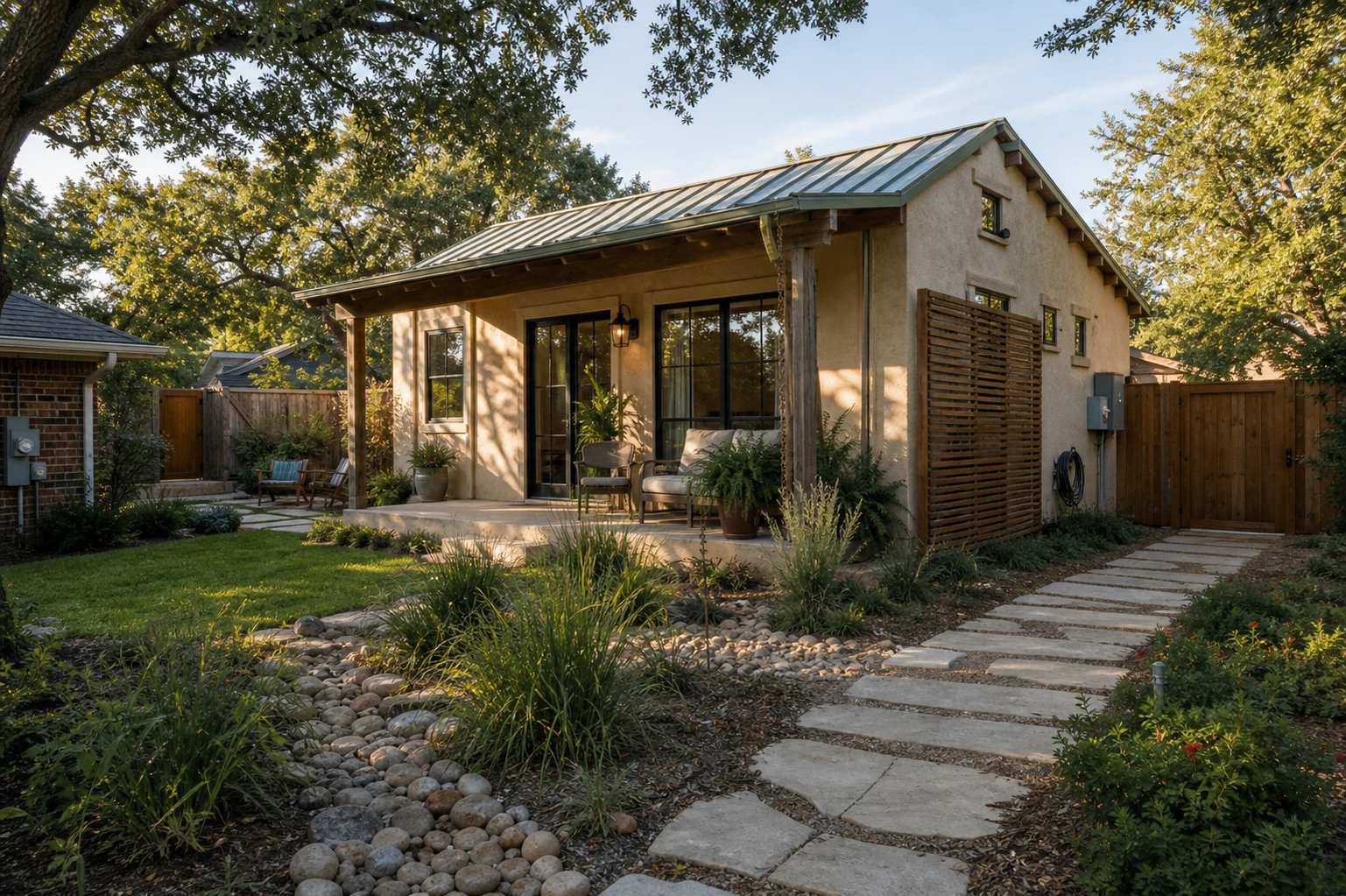
What Does a Small House in the Backyard Mean?
A small house in the backyard may be called an accessory dwelling unit, backyard home, guest house, casita, garage apartment, studio, pool house, tiny home, or detached office. The important distinction is whether it is a dwelling. If it includes living, sleeping, cooking, or bathing functions, it usually needs to be planned like housing.
That is why the early question is not only whether the house is small. The project also needs to answer who will use it, how long they will stay, where it will sit, how utilities will connect, and what the local jurisdiction allows.
If the backyard structure is meant to function as a home, start with local code and property feasibility. If it is only storage, office, or recreation space, the path may be different, but permits and restrictions can still apply.
Six Basic Questions to Answer Before You Build
These questions help separate a buildable backyard home from a nice idea that still needs a rule check, a site plan, or a different project path.
Design the Small House Around Daily Use
The best backyard homes are small, but they are not afterthoughts. A comfortable layout needs daylight, storage, privacy, a working bathroom, a kitchen or kitchenette when allowed, durable finishes, safe access, and a relationship to the primary home.
For family use, the priority may be privacy and aging-in-place comfort. For rental use, the priority may be independent access and code clarity. For an office or studio, the priority may be quiet, utilities, and whether the structure is truly a dwelling or a non-dwelling accessory space.
- Start with the use case before choosing square footage.
- Plan windows, entries, outdoor areas, and storage early.
- Keep the main house, neighbors, fence lines, and utility routes in the design conversation.
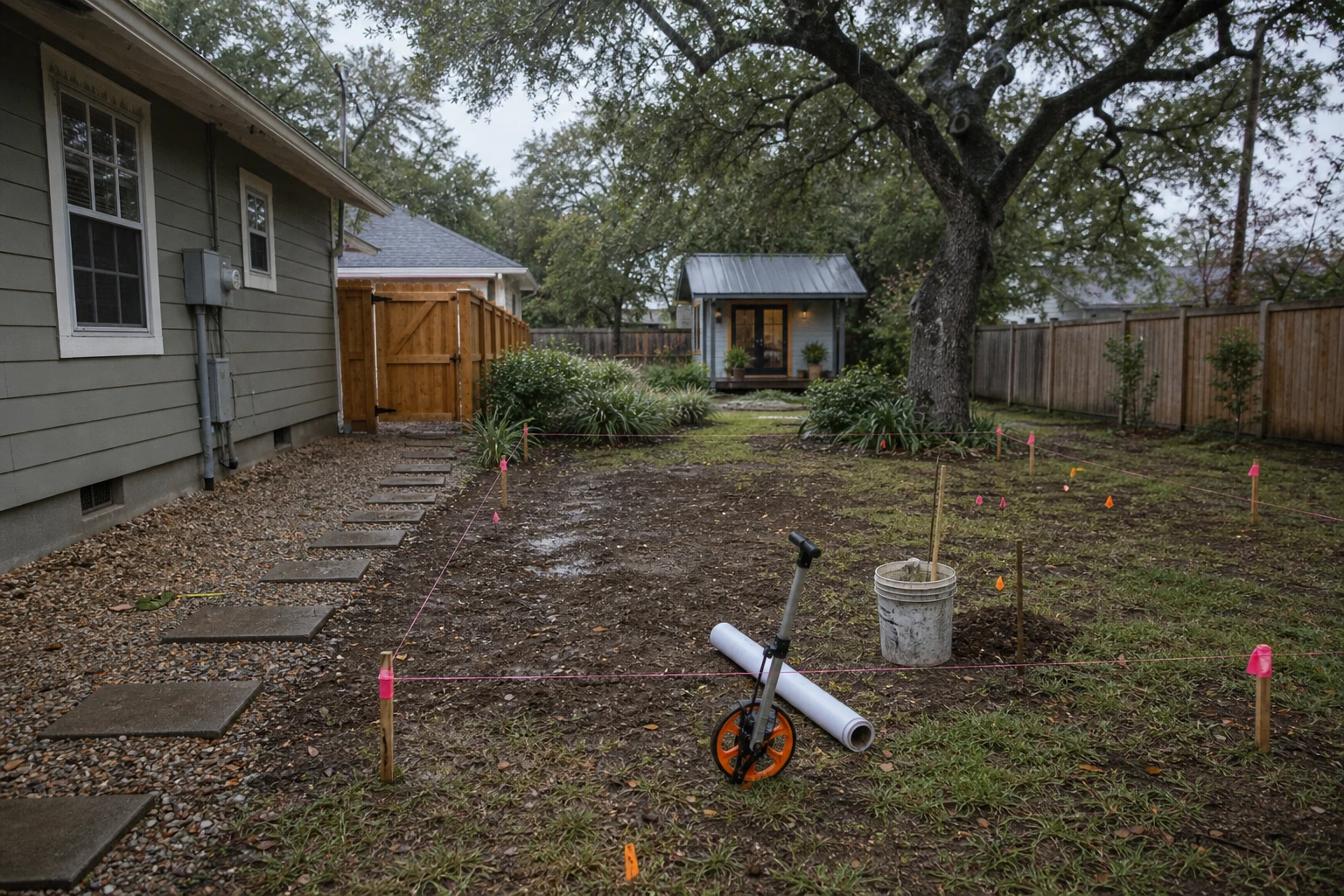
The Process From Basic Questions to a Buildable Plan
A backyard small house becomes clearer when the work moves in order. Each step should reduce uncertainty before the owner commits to the next level of design or pricing.
Confirm whether the structure is intended as a dwelling, guest space, studio, office, garage conversion, or another accessory use.
Check zoning, setbacks, utilities, easements, parking, drainage, trees, and private restrictions tied to the address.
Connect the living program, site work, utility plan, drawings, finishes, and construction sequence.
Separate the small house shell from foundation, trenching, utility upgrades, walks, grading, permit fees, and inspection corrections.
Once feasibility is clear, the plan set can support permit review, trade coordination, and construction.
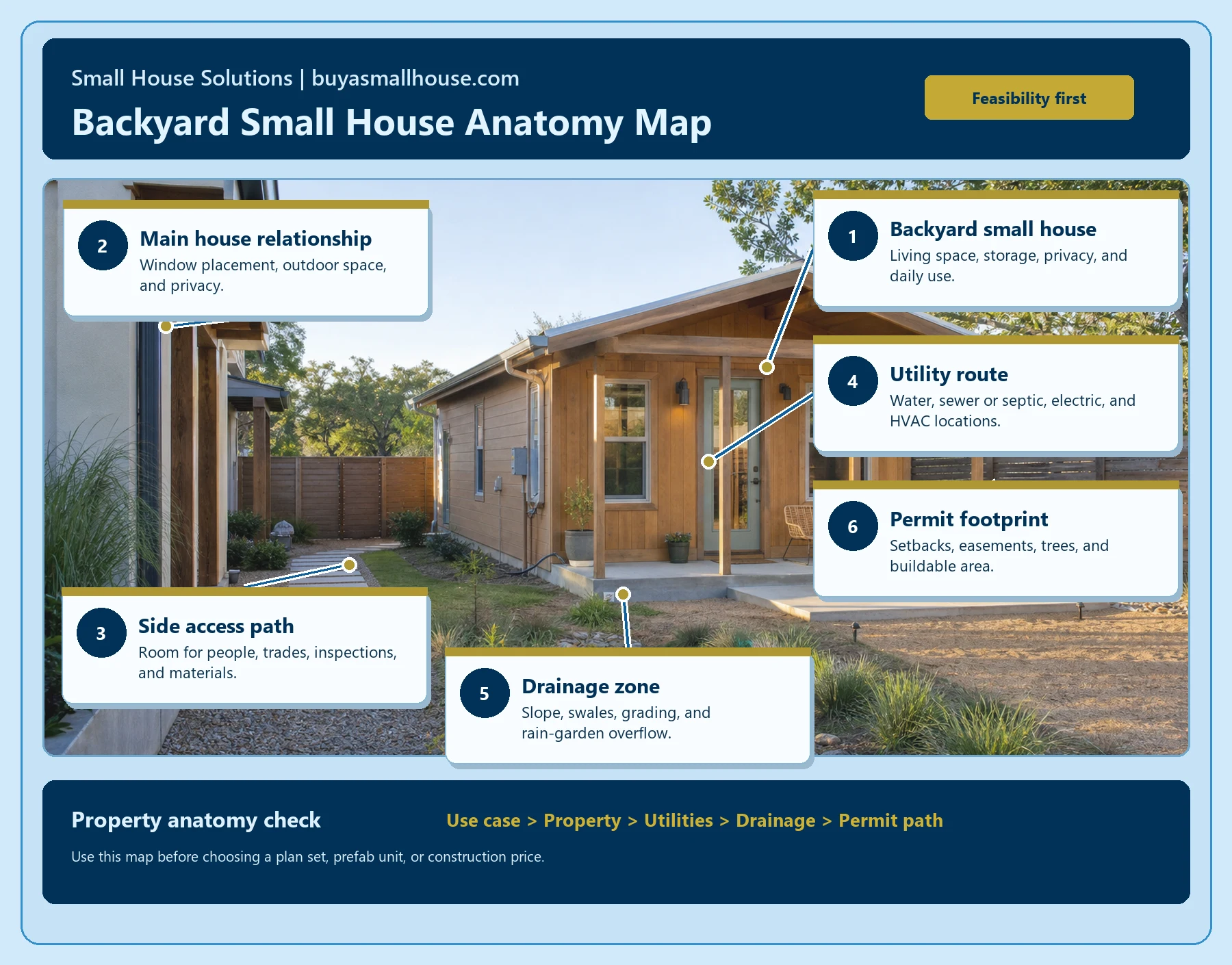
Backyard Small House Anatomy Map
The anatomy map below shows what should be checked on the property: the backyard dwelling, main house relationship, side access, utility route, drainage, and permit footprint.
Decision Drivers That Change the Answer
The same backyard idea can become a simple accessory structure, a permitted ADU, a garage conversion, or a no-go. These are the issues worth confirming early.
| Question | Why it matters | Decision to make early |
|---|---|---|
| Dwelling or accessory space? | Sleeping, cooking, bathing, and long-term occupancy can move the project into a different permit and code path. | Name the use before buying a plan. |
| Local rules | City, county, and neighborhood rules can affect size, height, setbacks, parking, occupancy, and review requirements. | Confirm the official path for the address. |
| Private restrictions | Deed restrictions, HOA rules, easements, and covenants can affect what is allowed even when public code appears workable. | Review property documents early. |
| Utilities and site work | Water, sewer, septic, electrical service, drainage, trenching, and grading can change feasibility and cost quickly. | Price utility strategy before treating the unit price as the project price. |
| Privacy and access | A backyard home should not create awkward circulation, neighbor conflicts, or a layout that feels like leftover yard space. | Design the path, entry, windows, and outdoor area with the main home in mind. |
What to Gather Before Asking for Pricing
A better first conversation starts with the facts that affect feasibility. Gather enough information to discuss the property, the intended use, and the site work before comparing plans or construction prices.
How Small House Solutions Helps
Small House Solutions helps homeowners turn broad backyard-house questions into a practical design-build path. The goal is to understand the property, the use case, and the permit scope before the project becomes expensive to change.
FAQs About Building a Small House in Your Backyard
Can I build a small house in my backyard?
Possibly. You need to confirm the local jurisdiction, zoning, property restrictions, setbacks, utilities, drainage, access, and whether the structure is considered a dwelling or another accessory use.
Is a backyard small house the same thing as an ADU?
Sometimes. If the structure is designed as an independent dwelling with living functions, it may be treated as an accessory dwelling unit. If it is only an office, studio, pool house, or storage structure, a different permit path may apply.
Do I need extra parking for a backyard house?
Parking depends on local rules, the project type, and the property. Some areas may require parking or access review, while others may focus more on zoning, setbacks, utilities, and occupancy.
How much does it cost to build a small house in the backyard?
The cost depends on size, design, utilities, foundation, site work, permit requirements, finish level, and construction access. A small unit can still have full-house systems, so pricing should include the backyard site work and not only the building shell.
What should I gather before asking for pricing?
Start with the property address, survey or plat if available, deed restrictions or HOA rules, yard photos, utility locations, access notes, intended use, timing, and a realistic budget comfort range.
Should I buy plans before checking my property?
No. Plans are more useful after you know the buildable area, local rules, utility strategy, and use case. Otherwise, the plan may need to be redesigned before it can be permitted or priced correctly.
Official Sources to Verify Before You Build
Rules can change, and the answer is address-specific. Use official sources to verify the current path before relying on a design, budget, or permit assumption.
Have a backyard small house question?
Start with the property, the use case, and the likely permit path. Small House Solutions can help you decide what needs to be verified before design and pricing.