
Austin HOME Initiative: Plan a Buildable Small-House Project
Important: the Austin HOME Initiative can open new options for ADUs, tiny homes, two-unit projects, three-unit projects, and small-lot housing, but the address still decides what is buildable. Before choosing plans or pricing construction, confirm the HOME path, zoning, lot size, utilities, drainage, trees, private restrictions, and permit package.
Small House Solutions helps Austin homeowners turn HOME Initiative questions into a practical design-build plan: what the property can support, what the city review path requires, and what scope should be priced before the project moves forward.
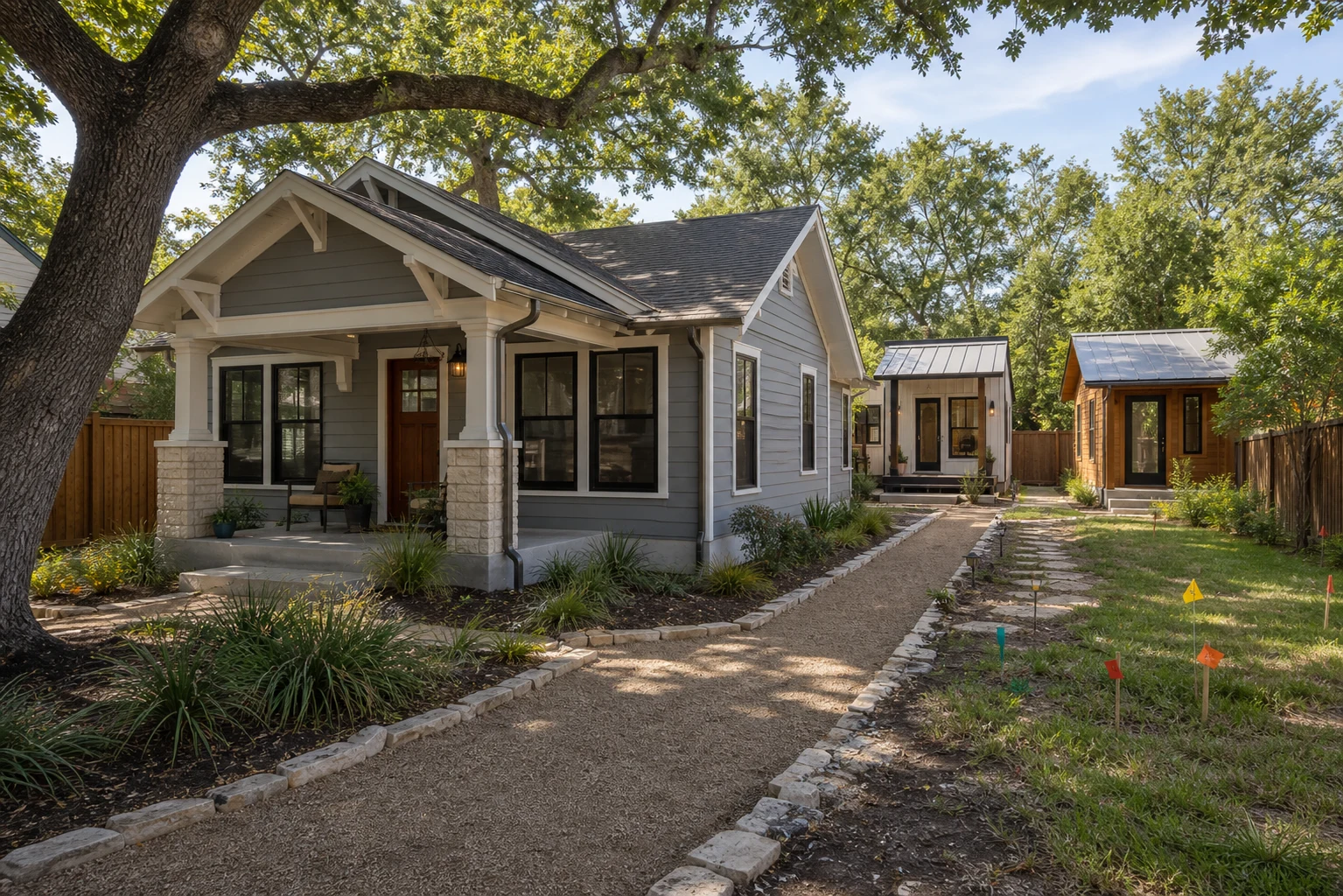
What the Austin HOME Initiative Means for Homeowners
The City of Austin describes HOME as code amendments to the Land Development Code intended to provide more housing types and increase housing supply within single-family zoned areas. Phase 1 allows up to three housing units, including tiny homes, on SF-1, SF-2, and SF-3 zoned properties when the project satisfies the applicable standards.
Phase 2 added a small-lot single-family residential use for certain lots at least 1,800 square feet and less than 5,750 square feet, along with subdivision, residential infill, and building-permit paths depending on the property. That makes the HOME Initiative powerful, but also very address-specific.
This is not just a policy page. It is a planning service for homeowners who need to know whether HOME creates a realistic building path, how that path affects design, and what should be priced before the project becomes expensive to change.
Six HOME Initiative Checks Before You Design
HOME can change the conversation, but it does not erase site constraints. These checks keep the project grounded in the exact lot.
Design the Project Around the HOME Path
The best plan depends on the rule path. A three-unit concept, an ADU, a tiny home, a small-lot split, and a preserved-home project can all ask different questions about footprint, access, utilities, privacy, parking context, drainage, and construction staging.
That is why Small House Solutions starts with the site before the drawings. The service conversation should name what is confirmed, what remains an allowance, and what still needs official city review.
- Confirm the HOME path before buying plans.
- Use the buildable envelope to shape size, entries, windows, and privacy.
- Price utilities, site work, plan review, and inspections with the units.
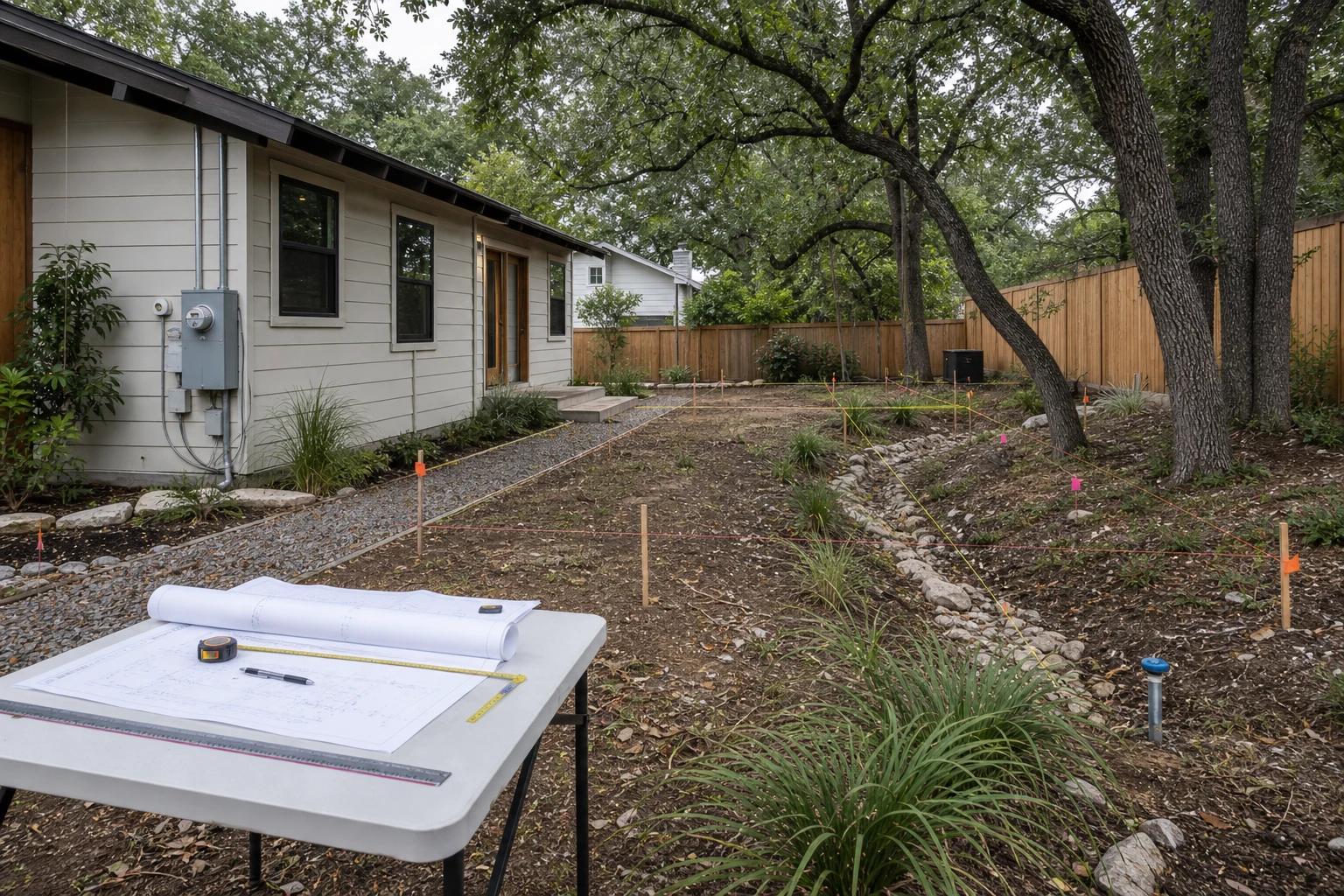
Austin HOME Initiative Service Process
Use this sequence before committing to design drawings, a lot strategy, prefab specs, or construction pricing.
Check zoning, lot size, overlays, platting status, deed restrictions, and whether HOME Phase 1 or Phase 2 is relevant.
Look at ADU, two-unit, three-unit, tiny-home, small-lot, preservation, or standard residential options.
Locate trees, easements, utilities, drainage, access, outdoor space, and likely construction staging.
Align drawings, addresses, code review, utility strategy, fees, and plan review requirements.
Include unit construction, site work, utilities, review comments, inspections, selections, and contingency.
Austin HOME Initiative Anatomy Map
The anatomy map below shows the property checks that should happen before the HOME Initiative becomes a plan set or fixed price.

Decision Drivers That Change the HOME Answer
The same address can support different outcomes depending on the path. This table keeps early decisions clear.
| Driver | Why it matters | Decision to make early |
|---|---|---|
| Phase 1 or Phase 2 | Multiple-unit projects and small-lot paths are different review questions. | Choose the correct path before designing the footprint. |
| Lot and platting status | Small-lot options can involve subdivision, infill, or building-permit paths. | Confirm whether the lot already qualifies or needs a subdivision step. |
| Coverage, FAR, and height | Building coverage, impervious cover, GFA/FAR, and height can control the actual size. | Size the project from the rules, not from a favorite plan. |
| Utilities and access | More units can change water, sewer, electric, meter, address, and construction-access needs. | Price utility strategy before treating the building price as the project price. |
| Preservation or replacement | Keeping an existing structure may affect the design logic and possible incentives. | Decide whether preserving the existing home helps the project. |
| Private restrictions | Deed restrictions or covenants can affect what is allowed even when city code looks promising. | Review property documents before relying only on HOME rules. |
How Small House Solutions Helps
Small House Solutions helps homeowners connect the Austin HOME Initiative to real design-build decisions. The goal is to avoid guessing from policy headlines and instead build a property-specific path.
Austin HOME Initiative FAQ
What is the Austin HOME Initiative?
The Austin HOME Initiative is a set of Land Development Code amendments intended to allow more housing types in Austin's single-family zoned areas, including multiple-unit residential options and small-lot pathways when the property qualifies.
Can the Austin HOME Initiative let me build more than one unit?
Possibly. Austin's HOME Phase 1 rules allow up to three housing units, including tiny homes, on SF-1, SF-2, and SF-3 zoned properties when the project satisfies the applicable standards.
Does HOME Phase 2 mean any lot can be split?
No. HOME Phase 2 created a small-lot single-family residential use and related subdivision or infill processes, but the address, lot size, platting status, overlays, and review path still have to be checked.
Should I choose plans before checking the HOME path?
No. Check zoning, lot size, building coverage, impervious cover, utilities, trees, drainage, deed restrictions, and permit requirements before buying plans or pricing construction.
Can Small House Solutions help with Austin HOME Initiative planning?
Yes. Small House Solutions can help homeowners understand the property, compare ADU, two-unit, three-unit, and small-lot options, and move toward a realistic design-build path.
Are Austin HOME Initiative rules the same as ADU rules?
They overlap, but they are not identical. ADU rules focus on additional dwelling units, while HOME includes broader two-unit, three-unit, tiny-home, small-lot, and infill changes that may affect the best project path.
Official Austin Sources to Verify
HOME rules, review paths, and technical requirements can change. Use official sources before final design or permit submittal.
Plan the HOME path before you price the project.
Bring the address, the use case, and the housing goal. Small House Solutions can help turn the Austin HOME Initiative into a realistic small-house plan.