
Best Texas Home Builders: How to Choose the Right Custom Builder
The best Texas home builders are not chosen by a generic list alone. The right builder is the one whose proof, permit knowledge, site planning, pricing clarity, communication, and completed work match your address, budget, and home type.
Small House Solutions helps homeowners compare the builder decision against the real project path: the lot, the scope, the design, the local review process, the trade partners, and the full cost of getting a custom home built responsibly.
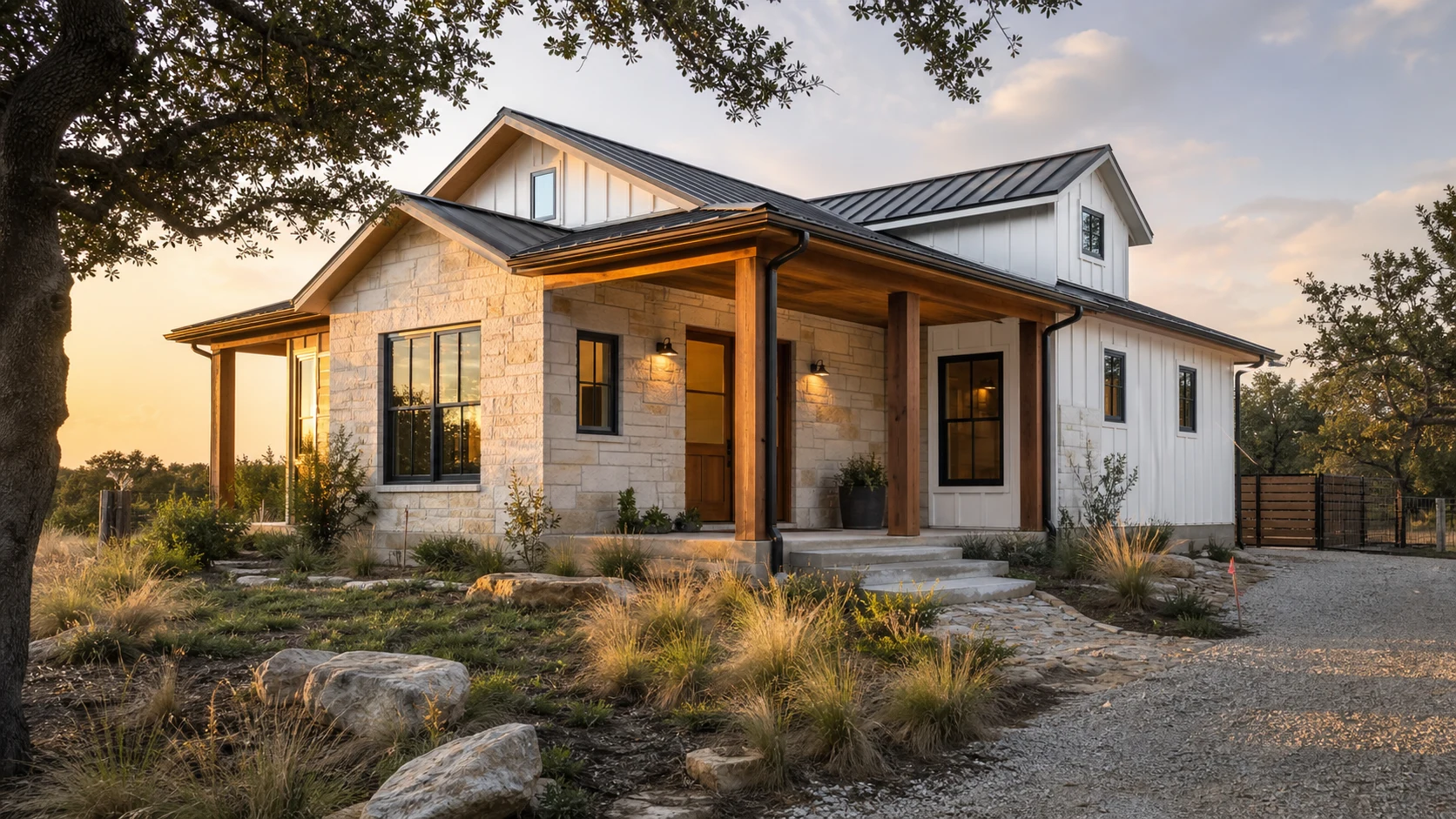
What “Best Texas Home Builders” Should Mean
Search results can make custom home builder selection look like a popularity contest. A better approach is to ask which builder can connect your goals to a buildable Texas project: the address, soil, utilities, drainage, local permit path, architectural scope, finish level, budget, timeline, and inspection process.
A builder who is excellent for a large luxury estate may not be the right partner for a compact custom home, ADU, backyard home, or smaller efficient residence. The best choice is the builder whose process fits the exact job, not only the builder with the broadest claim.
Ask for finished work, references, clear inclusions and exclusions, permit experience, trade coordination, communication rhythm, warranty language, and examples of how the builder handles site surprises.
Six Checks Before You Choose a Texas Builder
Use these checks before requesting final pricing or signing with a custom home builder in Texas.
Why Texas Builder Fit Changes by Region
A statewide search for the best Texas home builders still has to become local before it becomes buildable. The right builder for an Austin infill lot may not be the same fit as the right builder for a Hill Country acreage property, a Houston-area drainage-sensitive lot, a San Antonio remodel-addition, or a rural county project with septic and long utility runs.
The point is not to overcomplicate the search. It is to choose a builder whose proof and process fit the region, the jurisdiction, and the actual site.
Plan the Builder Conversation Around the Actual Project
The best builder conversation starts with the property, not a generic square-foot price. A good Texas custom home estimate should explain what is known, what is assumed, and what still needs official review before the number can be trusted.
That matters even more for smaller homes and ADUs, where site work, utilities, design decisions, and permitting can represent a large share of the project. A compact home still needs careful design, durable materials, a real foundation strategy, and a construction sequence that respects the lot.
- Send the address, survey, photos, desired size, and rough budget before asking for a fixed price.
- Ask each builder to separate building cost from site work, utilities, engineering, permitting, allowances, and contingency.
- Compare builder proposals by scope and risk, not only by the lowest headline number.
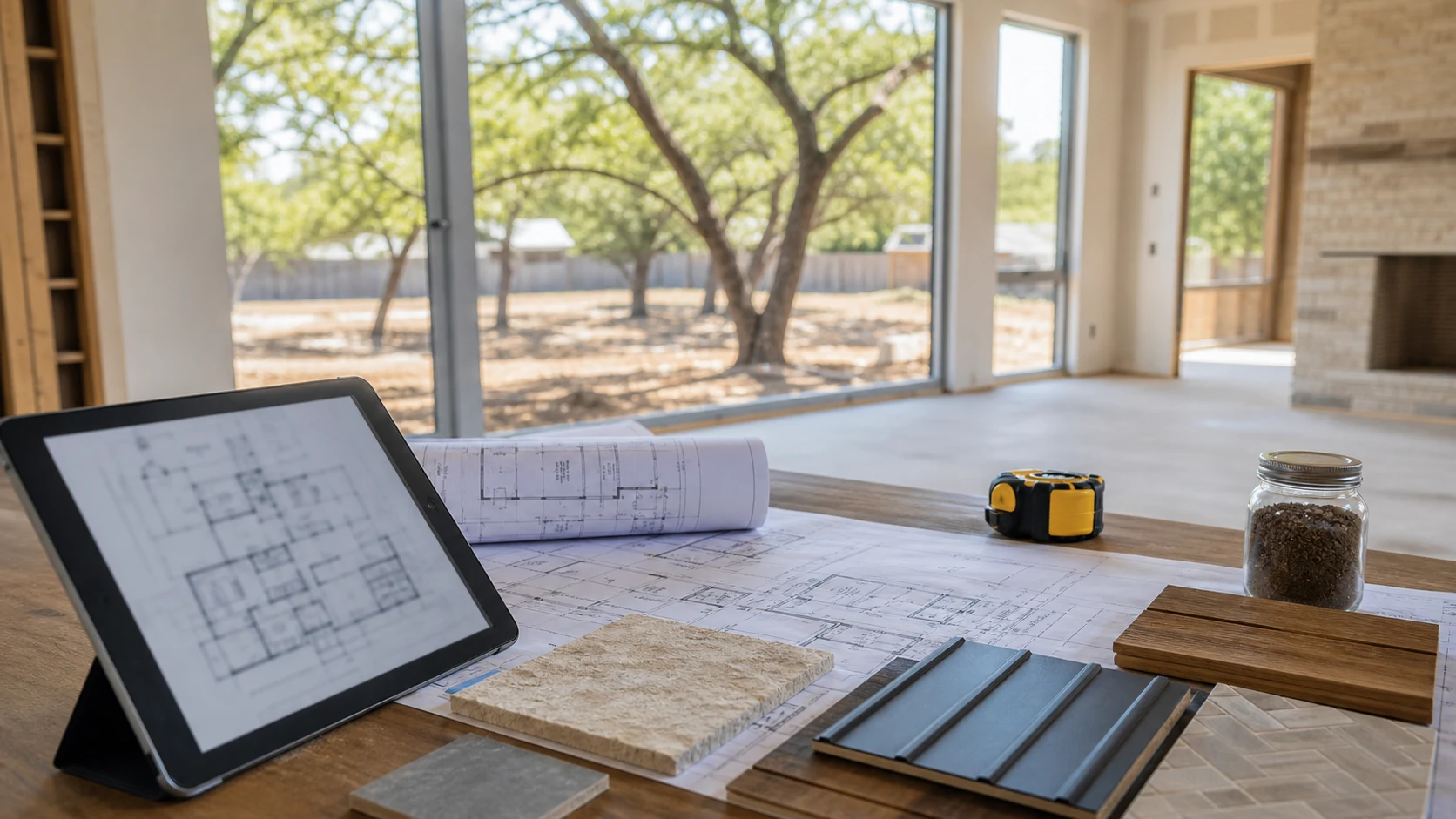
Custom Home Builder Selection Process
Use this sequence to move from search results to a builder-fit decision that can survive design, permitting, and construction.
Name whether you are building a small custom home, larger custom home, ADU, backyard home, addition, remodel, or phased design-build project.
Check local jurisdiction, zoning, utilities, private restrictions, floodplain or drainage issues, trees, driveway access, and the likely permit process.
Review finished projects, references, scope samples, communication practices, warranty language, and relevant local experience.
Make sure proposals include or clearly exclude design, engineering, permits, foundation, site work, utilities, selections, inspections, and contingency.
Understand how the builder moves from feasibility to design, pricing, contract, permit, construction, change orders, inspections, and closeout.
Select the builder whose experience, scope clarity, budget range, timeline, and project controls match the actual address and desired home.
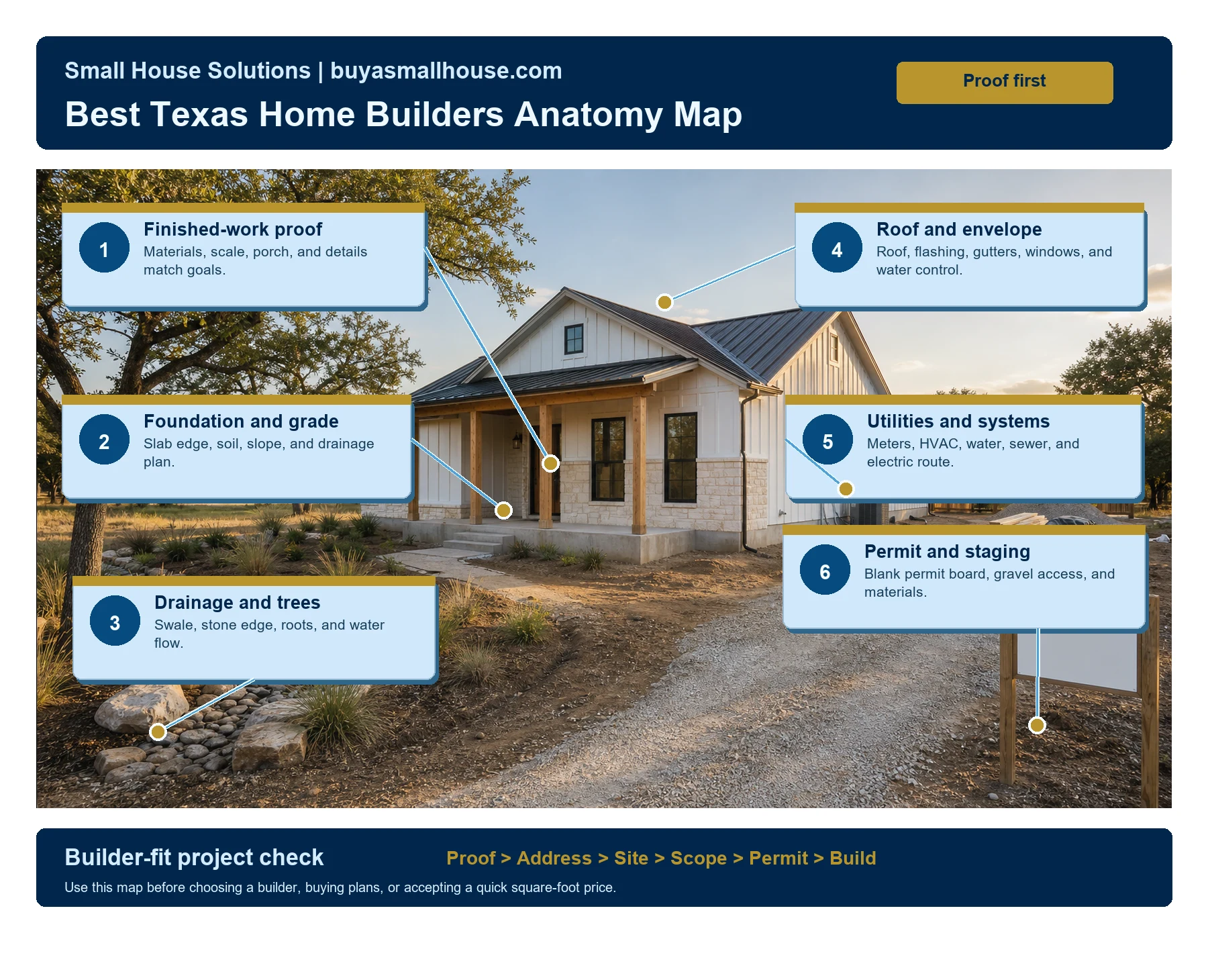
Best Texas Home Builders Anatomy Map
The anatomy map below shows how a builder-fit decision ties the home to visible site conditions before plans, permits, and pricing become expensive to change.
Decision Drivers That Change Builder Fit
The same builder may be a strong fit for one project and a weak fit for another. These are the decisions to make early.
| Driver | Why it matters | Decision to make early |
|---|---|---|
| Project type | Small custom homes, ADUs, additions, remodels, and larger custom homes need different planning, trade coordination, and budget assumptions. | Match the builder to the home type before comparing bids. |
| Jurisdiction | Texas review paths vary by city, county, utility provider, private restrictions, and inspection requirements. | Confirm the official address path before design is finalized. |
| Foundation and site work | Soil, slope, trees, drainage, access, and utility distance can change the real cost quickly. | Price site work and foundation assumptions separately from finish choices. |
| Scope completeness | Low bids may omit drawings, engineering, permits, utility upgrades, allowances, selections, cleanup, or contingency. | Compare inclusions, exclusions, and unknowns line by line. |
| Trade licensing and verification | Specialty trades and local registrations can affect compliance even when the general builder selection feels simple. | Verify the builder, local requirements, and licensed trade partners through official sources. |
| Communication and warranty | Custom projects create decisions, change orders, inspections, punch lists, and service questions. | Review the project communication cadence and warranty process before signing. |
Proof To Confirm Before You Treat a Builder as Best
Because this page is about choosing the best Texas home builders, proof matters more than ranking language. Do not rely on a claim unless it is backed by a real project, a clear process, or a document the homeowner can review.
- Finished project examples that resemble your size, style, site type, and budget range.
- References or review sources that discuss communication, schedule, change orders, closeout, and service after move-in.
- Insurance, warranty, contract, scope, allowance, and change-order language that is understandable before signing.
- Permit experience for the city, county, or utility path that controls the property.
- Licensed trade verification where electrical, plumbing, HVAC, or other specialty work requires it.
- A clear explanation of what is excluded from the estimate, especially site work, utilities, engineering, and contingency.
Only add public project, testimonial, insurance, license, or service-area claims when the business owner has approved them. For homeowners, verify builder and trade details through official sources and the actual contract documents.
How Small House Solutions Helps
Small House Solutions helps homeowners make the builder decision around the actual property and scope, especially when the goal is a smaller, efficient custom home, ADU, backyard home, or design-build project that needs practical feasibility before detailed pricing.
What To Send Before You Ask for Builder Pricing
A better first conversation gives the builder enough information to respond with real next steps instead of a vague range.
The goal is not to over-prepare. It is to help the builder tell you what must be verified before a plan, price, and schedule can be trusted.
Best Texas Home Builders FAQ
What makes a Texas home builder one of the best choices?
The best Texas home builders for your project should show relevant finished work, explain the local permit path, price the full scope clearly, coordinate licensed trade partners where required, communicate well, and understand the site conditions that affect foundations, utilities, drainage, access, and budget.
Should I choose a local Texas builder or a statewide builder?
Choose the builder who can prove fit for the address, not just the biggest service area. A local or regional builder may understand the jurisdiction, soil, utilities, suppliers, and inspection habits better, while a statewide builder still needs strong local project management and permit knowledge.
Does Texas require a statewide home builder license?
Texas does not work like every state, so homeowners should verify the exact requirement for the project and location. Some trade licenses are statewide, local registration or permitting rules may apply, and licensed electrical, HVAC, plumbing, or other specialty work should be checked through official sources.
What proof should I ask a Texas home builder for?
Ask for finished project examples, references, insurance information, warranty language, a sample scope or contract, local permit experience, a clear change-order process, and names or license details for specialty trade partners where licensing applies.
What affects custom home pricing in Texas?
Major cost drivers include house size, design complexity, foundation and soil conditions, energy and envelope choices, finish level, site access, utilities, drainage, trees, engineering, permit comments, trade availability, and the amount of contingency included.
Can Small House Solutions help with smaller custom homes?
Yes. Small House Solutions focuses on smaller, efficient custom homes, ADUs, backyard homes, additions, and related design-build projects. The best first step is a project-fit conversation that compares the address, scope, budget, and desired home type.
Why does builder fit vary across Texas?
Builder fit can change by region because soil movement, drainage, wind exposure, floodplain review, septic or sewer access, utility providers, city or county permit paths, HOA rules, and trade availability are not the same across every Texas property.
What should I send before contacting a custom home builder?
Send the property address, survey or plat if available, photos of the lot and access, desired size, rough budget range, preferred timeline, must-have rooms, utility information, HOA or deed restrictions, and any existing drawings or inspiration images.
Official Sources to Verify
Rules, licensing checks, and permit paths can change. Use official sources for the exact property and trade scope before final design, financing, or construction decisions.
Choose the builder after the project path is clear.
Bring the address, lot photos, budget range, desired home type, and timeline. Small House Solutions can help compare the project against the real site, scope, and design-build path.