
Can an ADU Builder Truly Guide You to Greener Materials?
Can an ADU builder truly guide you to greener materials? Yes, but only when the guidance turns green claims into clear decisions about performance, indoor air quality, durability, sourcing, cost, and proof.
A useful ADU builder should not just say a product is eco-friendly. The builder should explain where it belongs in the assembly, what it changes, what documentation supports the claim, and whether it fits the budget, climate, maintenance plan, and permit path for the actual project.
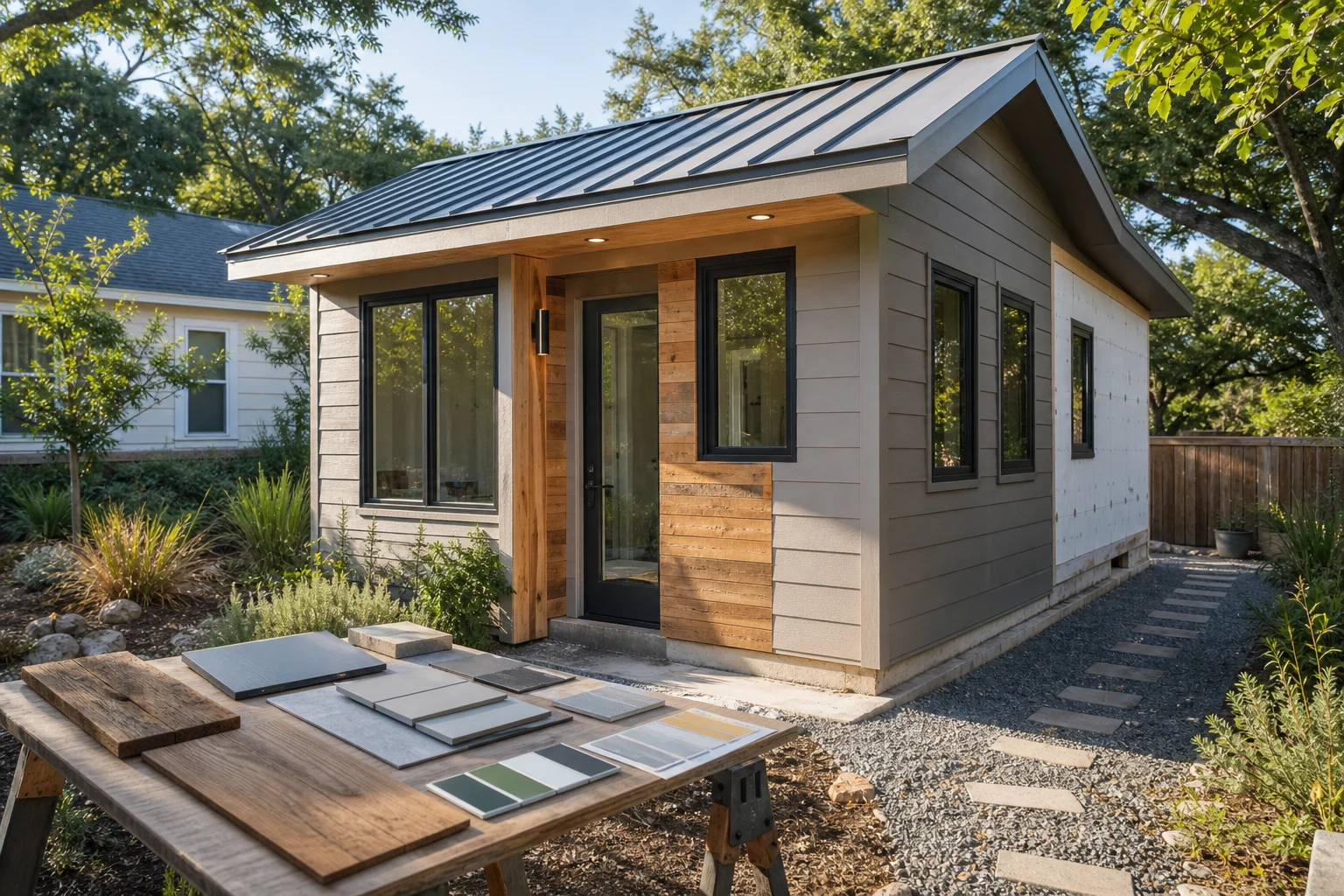
What a Greener-Materials Guide Should Actually Do
An ADU builder can be a real guide when they translate product claims into buildable choices. That means comparing recycled content, VOC levels, insulation strategy, window performance, moisture risk, local availability, lead time, warranty terms, and long-term maintenance as one project system.
The builder's job is not to sell the greenest-sounding product. The job is to help you choose materials that work in a small dwelling, survive the local climate, support healthier indoor air, and still fit the scope.
The classification workbook marks this URL as a guide rebuild with a prior crawler/status issue and a proof gap. This rebuild keeps the exact target query and adds a clearer service CTA, next-step path, and material-proof framework.
Six Checks Before You Approve a Green ADU Material
Use these checks before accepting a green upgrade, selecting a finish package, or assuming a certification label tells the whole story.
Ask for a Material Matrix, Not a Vague Green Promise
A material matrix is a simple way to make the conversation concrete and avoid greenwashing. It lists the proposed material, where it will be used, the reason for choosing it, the proof behind the claim, the cost impact, the installation risk, and the backup option if availability changes.
This is especially useful on an ADU because small changes can affect the whole project. A window upgrade may affect energy performance and comfort. A siding choice can affect fire, water, maintenance, and appearance. A low-VOC finish can support indoor comfort, but it still needs proper ventilation and curing time.
- Ask the builder to explain one practical benefit for each green choice.
- Compare the first cost with durability, maintenance, and energy implications.
- Keep product documentation with the estimate so selections do not become vague allowances.
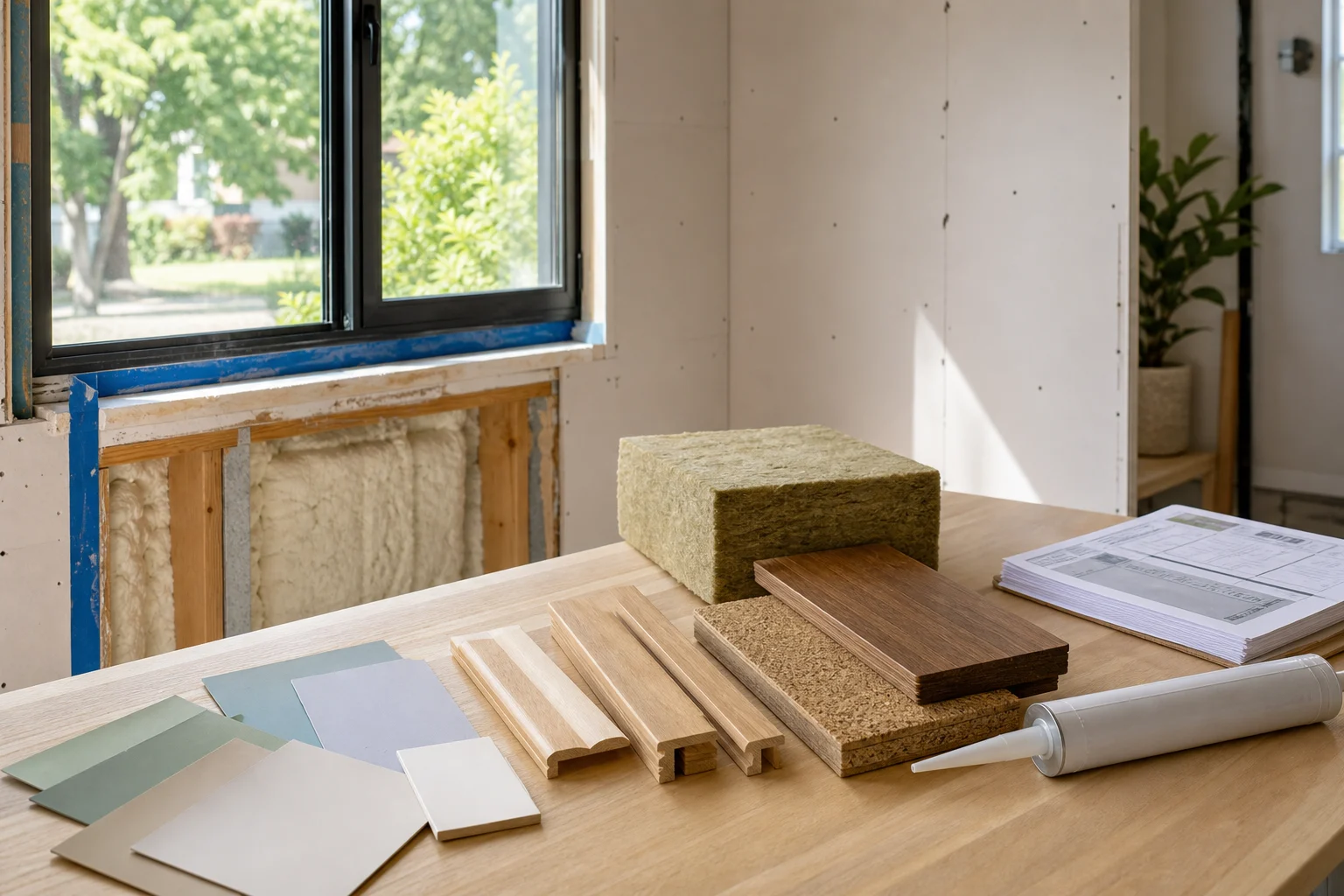
Greener ADU Material Guidance Process
Use this sequence before approving a finish package, buying materials, or accepting a builder's green upgrade price.
Decide whether the priority is indoor air, lower energy use, durability, lower embodied impact, local sourcing, maintenance, or a balanced package.
Review roof, walls, windows, floor, foundation, ventilation, finishes, and site conditions together instead of one product at a time.
Ask for data sheets, VOC information, energy ratings, certification details, warranty terms, lead times, and installer notes.
Separate required materials from optional upgrades, then compare upfront cost with durability, energy use, comfort, and maintenance.
Put selected materials, substitutions, allowances, and owner approvals in writing before construction decisions become expensive to change.
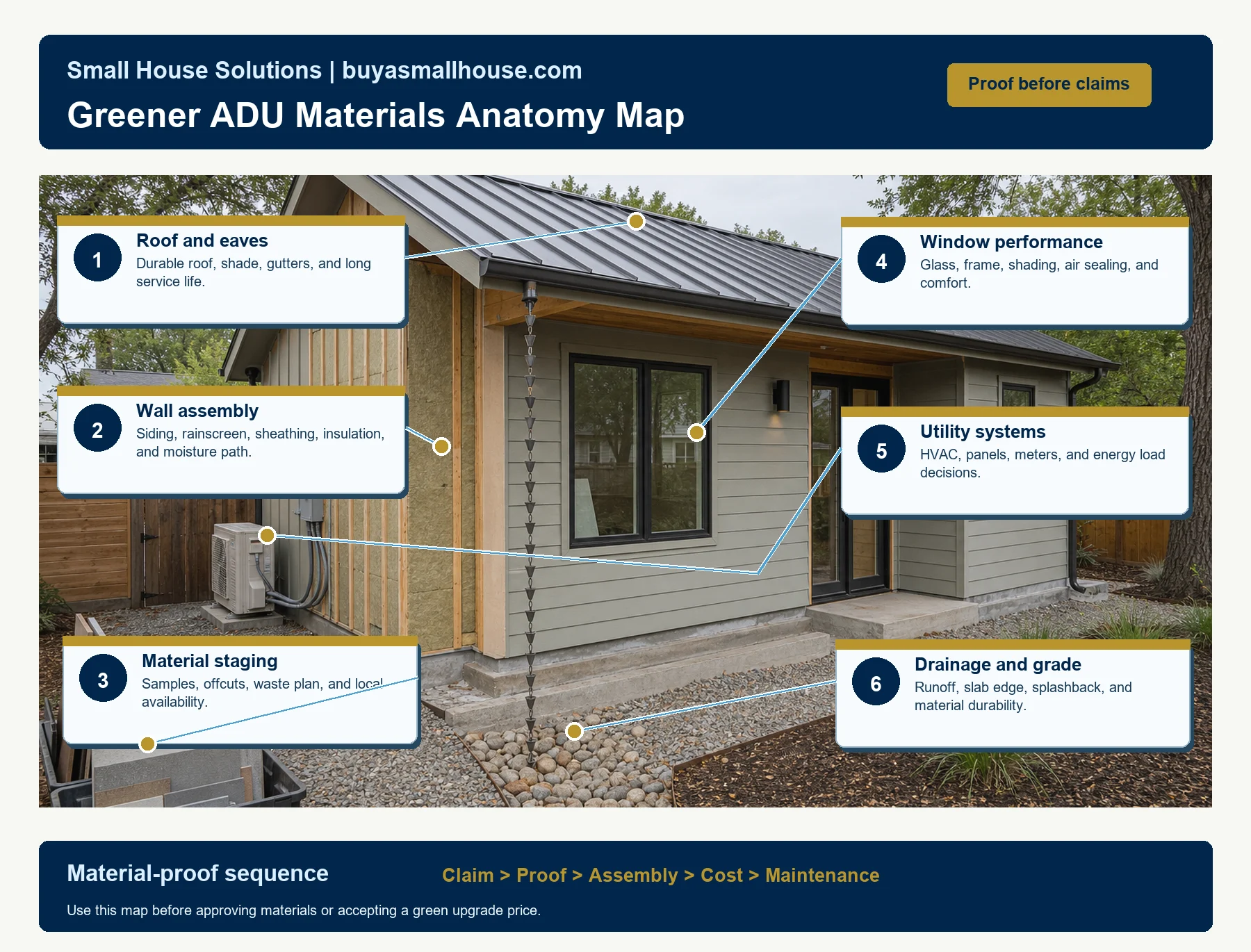
Greener ADU Materials Anatomy Map
The anatomy map below ties greener-material decisions to visible ADU features a builder should be able to explain.
Decision Drivers That Change the Material Conversation
The best material is not always the material with the greenest label. The right choice depends on what it has to do inside the ADU.
| Driver | Why it matters | Decision to make early |
|---|---|---|
| Indoor air quality | Small homes concentrate odors and emissions faster than larger homes when finishes and ventilation are not planned together. | Ask for low-VOC documentation and a ventilation strategy. |
| Envelope performance | Insulation, windows, air sealing, and shading affect comfort, HVAC sizing, and energy use. | Compare assemblies, not just individual products. |
| Moisture and durability | A material that traps water or fails early can erase the benefit of a greener claim. | Review flashing, drainage, maintenance, and warranty terms. |
| Sourcing and availability | Local supply, delivery distance, lead time, and substitution rules can change both cost and impact. | Identify preferred and backup materials before pricing. |
| Certification proof | Labels can help, but they need to match the actual product and use case. | Request documentation instead of relying on marketing language. |
| Budget priority | Some green upgrades are high-value; others may be less important than better envelope work or drainage protection. | Rank upgrades by comfort, durability, energy, health, and cost. |
How Small House Solutions Helps
Small House Solutions helps homeowners turn broad green-material goals into a practical ADU scope. The goal is to compare the material choice against the design, site, cost, and build path before selections become expensive to change.
Greener ADU Materials FAQ
Can an ADU builder truly guide you to greener materials?
Yes, a qualified ADU builder can guide you to greener materials and greener building materials when they explain performance, durability, sourcing, indoor air quality, cost, and proof instead of relying on vague eco-friendly claims.
What should greener material guidance include?
It should include where the material will be used, how it performs in the wall or roof assembly, whether it supports indoor air quality, how durable it is, what proof or certification supports the claim, and how it affects cost.
Are recycled materials always better for an ADU?
Not always. Recycled content can help, but the builder still has to check durability, moisture risk, installation requirements, warranty terms, local availability, and whether the material fits the ADU design.
Why do low-VOC materials matter in a small ADU?
Small dwellings have less air volume, so finish choices can affect comfort and odor more quickly. Low-VOC paints, adhesives, sealants, cabinetry, and flooring can support better indoor air quality when selected and installed correctly.
Can greener materials change ADU construction cost?
Yes. Some products cost more up front, some save through durability or energy performance, and some only make sense when the builder can source them locally and install them without extra risk.
What questions should I ask before approving a green material?
Ask what problem it solves, what proof supports the claim, whether it fits the local climate, how it affects maintenance, whether it changes lead time, and what the builder would choose if budget or durability were the priority. This keeps the conversation focused on decisions instead of greenwashing.
Should I ask for certification labels?
Ask for documentation, but do not stop at labels. Useful proof can include product data sheets, VOC documentation, ENERGY STAR ratings, FSC labels, recycled-content data, warranty terms, and installer experience.
How does Small House Solutions help with greener material decisions?
Small House Solutions helps homeowners compare material choices against the ADU scope, budget, buildability, energy goals, indoor comfort, local sourcing, and long-term maintenance before selections become expensive to change.
Official Sources to Verify
Material standards, product programs, and energy guidance can change. Use official sources and product documentation before final selections, pricing, or construction decisions.
- Small House Solutions: original greener ADU materials source page
- EPA: volatile organic compounds and indoor air quality
- EPA: greener products and standards resources
- EPA: Comprehensive Procurement Guideline recycled-content program
- ENERGY STAR: residential windows, doors, and skylights
- FSC: what FSC labels mean
- Cradle to Cradle Certified: product standard
Make the green-material conversation specific.
Bring the ADU idea, budget range, and material priorities. Small House Solutions can help compare greener options against the actual scope, site, durability, and build path.