
Small House Solutions | Custom homes
Questions to Ask a Custom Home Builder Before Signing
The best questions to ask a custom home builder clarify responsibility, price assumptions, change control, schedule, communication, quality checks, and the documents the owner receives at handoff.

Discuss the household brief and unresolved scope before committing to construction.
Start here
Ask what is included before the first construction price is issued.
Investigate
Request examples of allowance decisions and change-order documentation.
Compare early
Confirm who communicates with the owner and who handles permits and inspections.
Ask for evidence behind the answer
Who prepares the site study and design? Who contracts engineering? What can change the price? Ask the builder to show how allowances, exclusions, and revisions appear in an actual sample agreement, with client information removed. A confident verbal answer is less useful than a process the owner can read and understand.
Interview the person who will manage the work
Ask who communicates day to day, how decisions are logged, when selections must be made, and how budget changes are approved. Discuss inspections, punch-list completion, written warranty terms, and the process for a later issue. Do not infer a universal builder warranty or general-contractor license requirement; confirm the qualifications and trade registrations applicable to the scope and jurisdiction.
Builder interview worksheet
| Question | Evidence to request | Warning to resolve |
|---|---|---|
| How is the price defined? | Allowances and exclusions | Unspecified site work |
| How are changes approved? | Written change procedure | Work begins before owner agreement |
| Who manages the build? | Named contact and reporting sample | Unclear responsibility |
| What happens at handoff? | Inspection and warranty documents | Promises without written scope |
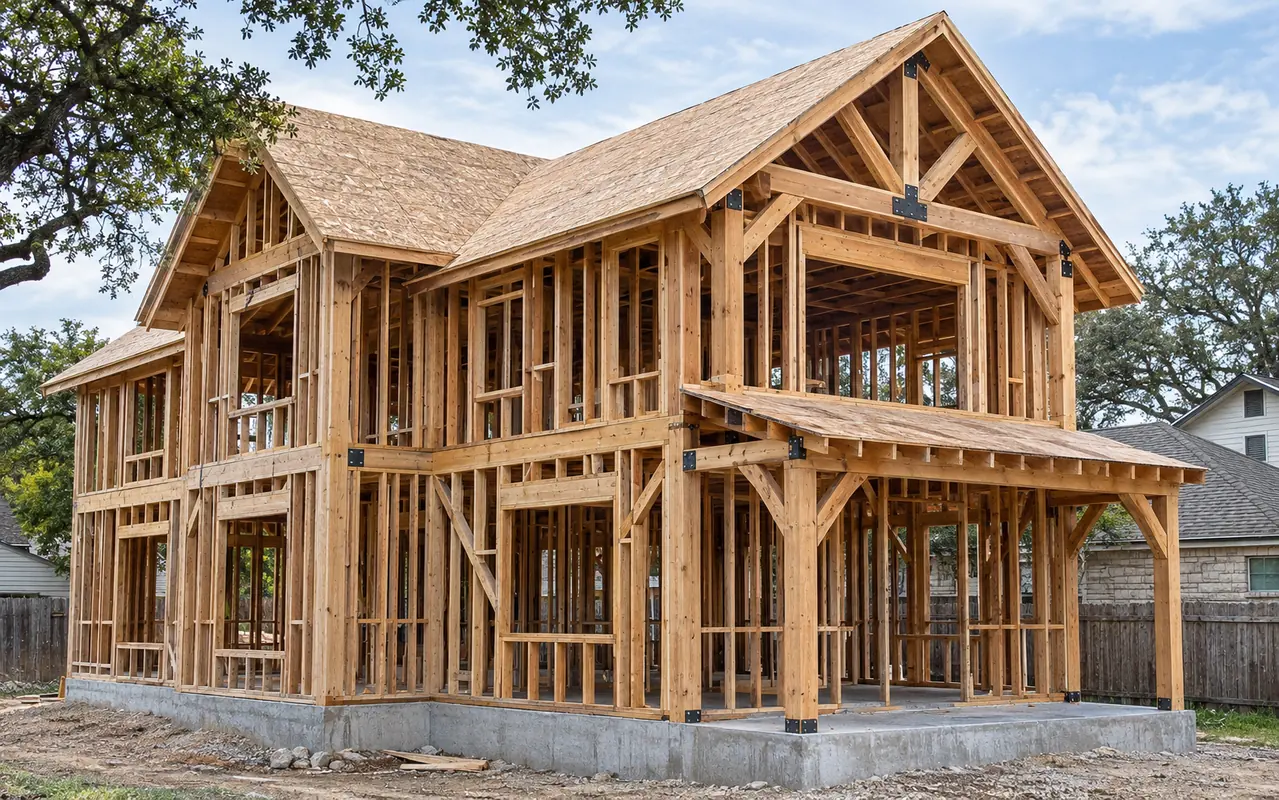
Review the roof, wall openings and structural connections before choosing finishes.
What the builder’s estimate should explain at each stage
A useful builder answer identifies the information supporting its current price and the work needed to make that price more definite. An early discussion may use a room program and broad assumptions. A construction commitment needs a clearer basis in drawings, specifications, site information, allowances, and exclusions. Calling both an estimate does not make them equivalent.
The owner should be able to distinguish a selection decision from an unresolved condition. One concerns what product or finish to buy; another may change the construction needed. A sample scope can show how the builder records each and how alternatives are evaluated when the preferred design exceeds the budget.
Responsibilities complete the explanation. Someone must develop the design response, coordinate professional input, update pricing, and issue the accepted documents. The provider should describe the actual services offered, including those separately commissioned. This evidence makes personalized-service claims reviewable without disclosing another client’s confidential figures. It also gives the interview a practical outcome: the household understands which decisions come next, what it receives for each stage, and the basis on which it will later accept the construction agreement.

Review the room layout and exterior elevations together.
Ask how allowances and exclusions become owner decisions
Have the builder explain an allowance in plain language and show how final selections are reconciled with it. Ask whether installation or supporting work can also change when an item changes. Review exclusions with equal care: who arranges the work, who coordinates the interface, and when must it be complete?
Use the actual project brief to test the answer. If utilities, design services, site work, or owner-supplied equipment are outside the construction agreement, the owner should still understand their place in the overall project. A transparent exclusion can be manageable. An unexplained gap is harder to manage. The interview should leave you able to compare completed outcomes and responsibilities, rather than select a proposal simply because its first page contains a lower number.
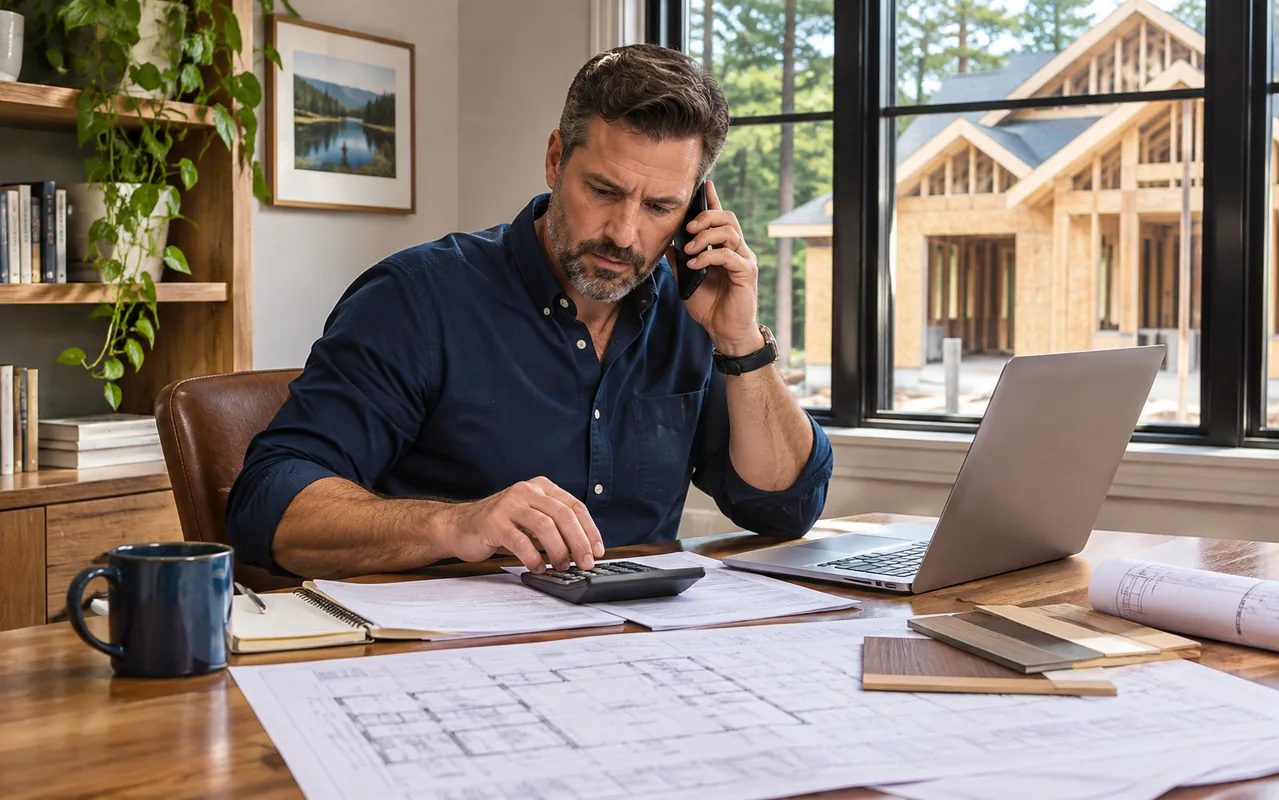
Define the project scope and financial questions before comparing funding or estimates.
Ask who handles decisions during construction
Explain how the household will authorize decisions. If two owners must agree on a selection, name the person who sends the final response and ask how the team distinguishes it from an exploratory conversation. Discuss availability for decisions that affect upcoming work. A useful reporting sample identifies the question, options, consequence of delay, and requested response; a progress photograph alone may show activity without telling the owner that a decision is waiting.
Ask for a sample change from request to final record
During the builder interview, ask for an anonymized example of a change request moving through its process. Choose an ordinary selection change rather than confidential client details. You want to see the request, scope explanation, price effect, owner approval, and updated information used by the team.
Ask what happens if the owner mentions the change directly to a trade on site. Who is authorized to accept it? How is conflicting information resolved? The example should clarify the process the builder actually proposes to use on your project, including any services or decisions that remain with separately engaged professionals.
Compare that process with your own availability and decision style. An owner who travels frequently may need a clear remote approval route; another may prefer scheduled design meetings. Record the arrangement in the proposed scope instead of relying on a general promise of good communication. A sample process does not guarantee a future outcome, but it gives you concrete evidence to compare across interviews and reveals how a small request becomes an agreed construction instruction.
Related planning decisions
Homeowner questions
Should I choose the lowest bid?
Compare complete scope first. A lower bid with missing engineering, utilities, allowances, or finish repairs may not represent the lower finished-project cost.
What should I ask the person supervising construction?
Ask how often they review the work, how decisions reach trades, how they report issues, and what authority they hold. Confirm the escalation route and their role in completion. Compare the proposed working arrangement rather than assume the salesperson will supervise the site.
What if a builder cannot give an exact price at the first meeting?
Ask what information is missing, what early range or allowance can reasonably be discussed, and what work produces a more detailed estimate. Uncertainty can be legitimate. The useful distinction is whether its cause, consequences, and next steps are explained clearly.


