
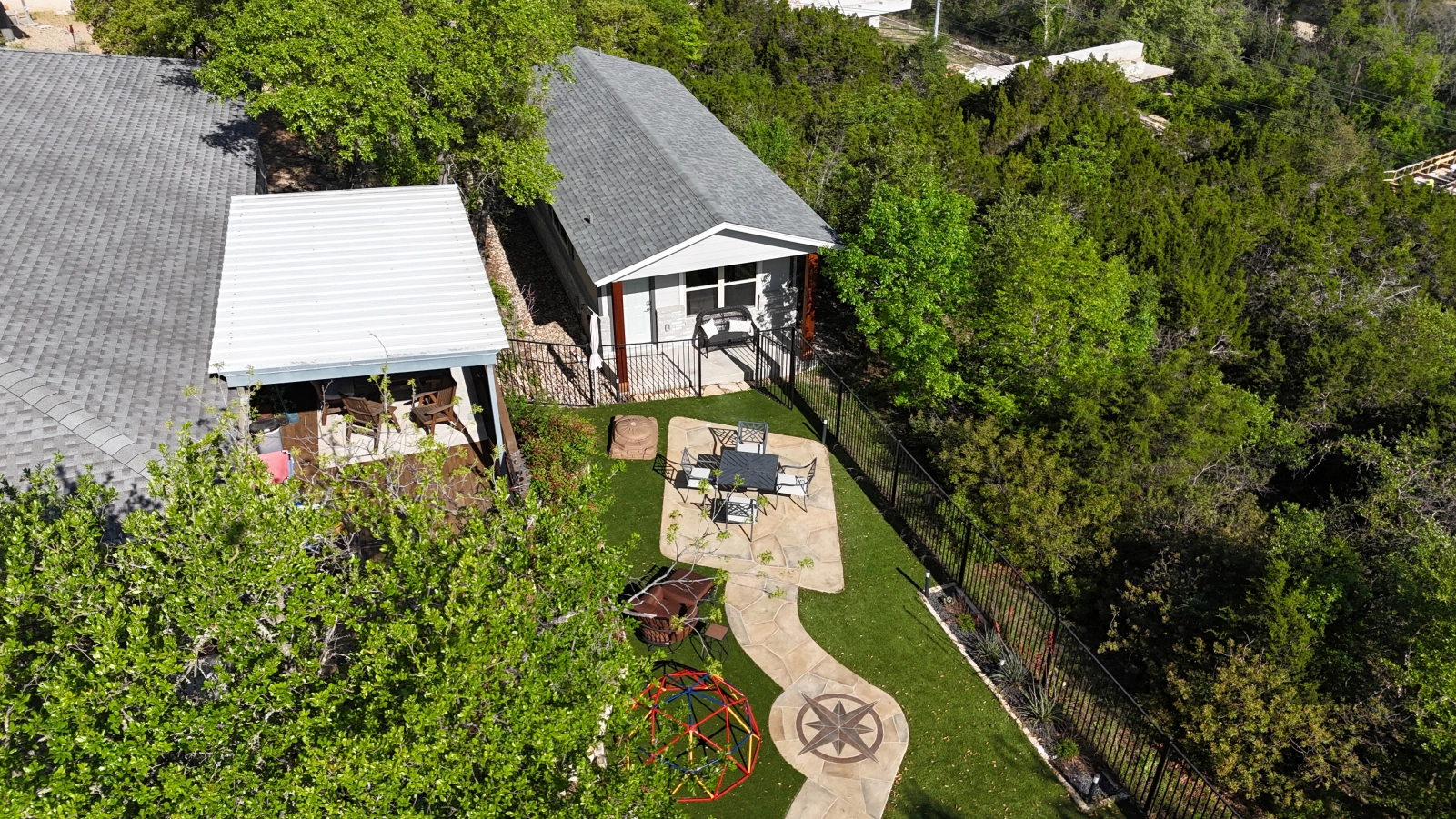
Austin ADU Builder for Feasibility, Design and Construction
Small House Solutions is an Austin ADU builder that helps homeowners find out whether an additional dwelling unit can work on their property.
From there, one team guides custom design, permitting, utility planning, construction, final inspections, and homeowner handoff. We start with the lot because zoning, trees, drainage, access, easements, and utility routes can change the ADU’s size, placement, and total cost.
Bring the property address, intended use, rough budget, preferred timing, and any survey or property documents you already have.
Start with your property before choosing an ADU plan.
An open backyard does not automatically mean every plan will fit. We look at Austin requirements, the usable building area, utility connections, how you plan to use the ADU, and whether crews can reach the work area.
- Zoning, lot size, and the permit path that may apply
- Setbacks, trees, easements, and drainage
- Existing units and address requirements
- Water, sewer, electric, HVAC, and trenching
- Side access, staging, privacy, and parking context
- Intended use, size, budget, and finish expectations
What an early review can do: show whether the idea looks promising, flag property constraints, and identify the documents or expert input needed next. Final eligibility and permits still depend on current Austin rules, accurate property records, required professionals, and City review.
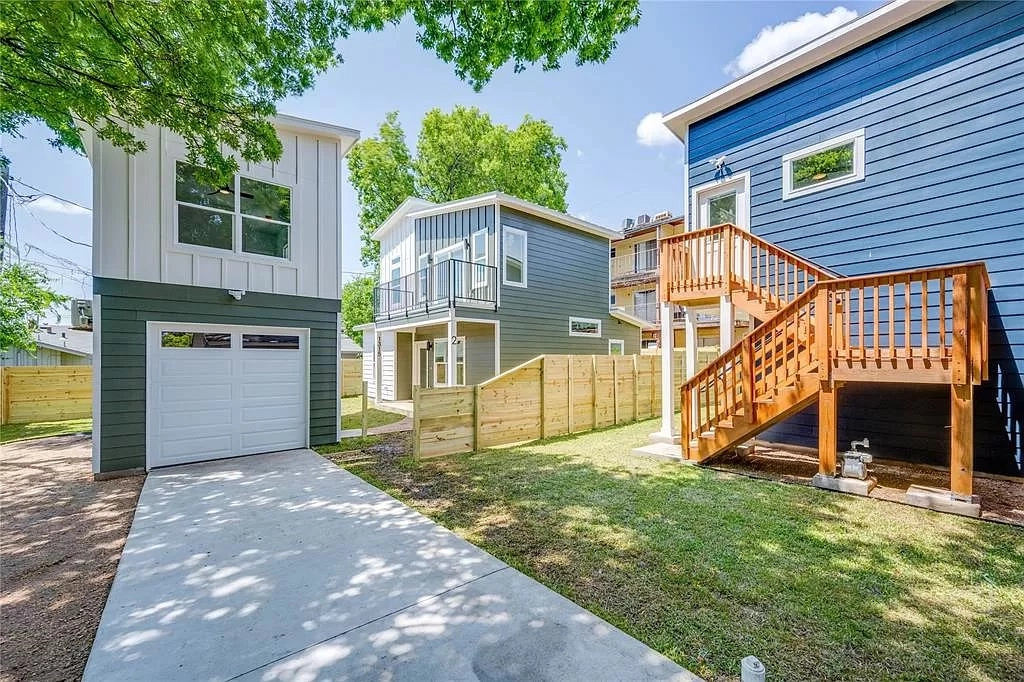
Keep your ADU decisions connected from first review to final handoff.
With one connected design-build team, decisions about the property, drawings, materials, budget, permits, utilities, construction, and final handoff can stay aligned as the project moves forward.
Property fit and feasibility
We begin with your address, how you want to use the ADU, the permit path that may apply, property constraints, utility questions, construction access, and the information needed before design begins. Use our 12-point Austin ADU feasibility check to see what the first review covers.
Custom ADU design
We shape the footprint, rooms, storage, privacy, daylight, entrances, exterior, materials, and accessibility around your property and the way you want to use the space.
Permit-ready plans and engineering
We prepare drawings for City review, coordinate the required engineers, organize the permit application, respond to comments, and explain how requested revisions may affect your plan and budget. See the full Austin ADU permit process.
Utilities and site work
We look at electrical capacity, water and wastewater routes, meters, heating and cooling equipment, trenching, drainage, grading, access, and yard restoration before those costs are treated as minor allowances. Review the Austin ADU utility planning guide for the site questions that can change the design.
Construction and communication
We coordinate the foundation, framing, exterior, licensed trades, materials, finishes, schedule, inspections, corrections, project documents, and the decisions you need to make along the way.
Final inspections and handoff
Complete final inspections, corrections, the homeowner walkthrough, remaining documents, and the warranty and handoff steps included in the signed agreement.
Your property determines the right Austin approval path.
Austin calls it an “Additional Dwelling Unit,” while you may call it an ADU, backyard home, casita, guest house, or garage apartment. Whatever name you use, the City looks at your property, the features inside the dwelling, the number of homes on the lot, and the work you plan to do.
Additional Dwelling Unit
A separate home on the same property as your primary house. Before selecting plans, check zoning, lot conditions, usable building area, addressing, utilities, safety requirements, and the permit process that applies.
Austin HOME and multi-unit options
Austin’s HOME amendments created more options for some two-unit, three-unit, and small-lot projects. Whether an option works for you still depends on your exact address and the requirements that apply there.
Garage apartment or conversion
Converting a garage or building above one may affect the structure, fire protection, access, parking, utilities, and construction approach. Starting with an existing building does not always make the project simpler.
Austin rules can change. Use the current Austin ADU rules guide to prepare, then confirm the requirements for your address before finalizing plans or pricing.
Price the whole project, not just the small building.
Small ADUs can cost more per square foot than homeowners expect because they still need a kitchen, bathroom, utilities, design, permits, foundation, structure, heating and cooling, inspections, and construction management.
- The ADU itself
- Size, foundation, structure, envelope, kitchen, bath, HVAC, windows, cabinetry, finishes, appliances, and storage.
- Your property and access
- Construction access, demolition, trees, drainage, grading, soil, required fire protection, work areas, fences, walkways, and yard restoration.
- Utility connections
- Electrical capacity, water and sewer routes, trenching, meters, service upgrades, gas service, and heating and cooling equipment.
- Design, permits, and professional services
- Survey, design, engineering, plan review, permits, revisions, selections, and other property-specific professional inputs.
- Allowances and unknowns
- Allowances, exclusions, changes you request, City comments, unexpected site conditions, material choices, and a realistic contingency.
Planning range, not a quote: these figures can help you decide whether to keep exploring the project. Your proposal should clearly explain what is included, what is an allowance, what is excluded, and what still needs property investigation or City review.
Read the Austin ADU cost guideCompare three ADU examples with size, location, and site details.
| Project example | Purpose and location | Climate-controlled + unconditioned area | Example planning price | What the example includes |
|---|---|---|---|---|
| Franklin Residence | ADU for a daughter · North Central Austin | 744 sq. ft. conditioned + 92 sq. ft. unconditioned | $270,000 | Includes design, engineering, and permitting. The example also includes an electrical service change and does not list a new water meter, street/right-of-way utility work, or protected-tree work. |
| Bullcreek | Office, guest space, and children’s play area · North Central Austin | 777 sq. ft. conditioned + 274 sq. ft. unconditioned | $295,000 | Includes design, engineering, and permitting, plus an electrical service change and protected-tree considerations. It does not list a new water meter or street/right-of-way utility work. |
| Live Oak Loft | ADU for a son · Williamson County outside Liberty Hill | 612 sq. ft. conditioned + 240 sq. ft. unconditioned | $190,000 | Includes design, engineering, and permitting. The example does not list a new water meter, street/right-of-way utility work, an electrical service upgrade, or protected-tree work. |
Use these examples to see how size and property conditions can affect planning. They are not bids for your address. The full spreadsheet labels the prices “if done today,” and market timing, utilities, City review, finishes, and confirmed project details can change the final number.
See all pricing examplesSee what happens at every stage and who helps move it forward.
Every Austin ADU schedule is different. Once the property and project details are understood, a clear plan should show each stage, who coordinates it, what you need to approve, and what may affect timing.
Start with your address
You + Small House SolutionsShare your address, goal, budget range, timing, known concerns, and available documents. At the end of this step, you should know whether the project is a good fit for a detailed property review.
Confirm what may fit
Small House Solutions coordinatesWe review the rules that may apply, survey needs, usable building area, utilities, access, trees, drainage, privacy, and the major questions that should be answered early.
Design your ADU
Design lead + your decisionsWe develop the site plan, floor plan, exterior views, electrical layout, finish direction, material list, and revisions needed for pricing and permitting.
Prepare for City review
Small House Solutions coordinates; City and engineers reviewWe coordinate the construction documents, required engineering, permit application, responses to City comments, and plan revisions. Engineers and City reviewers make the final decisions within their areas of responsibility.
Confirm the agreement and build
Small House Solutions + licensed tradesBefore construction, confirm what is included, your materials, allowances, exclusions, price, payment schedule, and change process. During the build, the team coordinates site work, construction, finishes, inspections, and project updates.
Inspections and homeowner handoff
City inspectors + project teamComplete required inspections and corrections, walk through the finished ADU, finish remaining items, and provide the documents, warranty information, and handoff steps included in the signed agreement.
Compare real projects before choosing your builder.
Explore Small House Solutions drawings, construction stages, and finished projects. Bring a favorite example to your consultation and ask how its site conditions and design choices compare with your property.
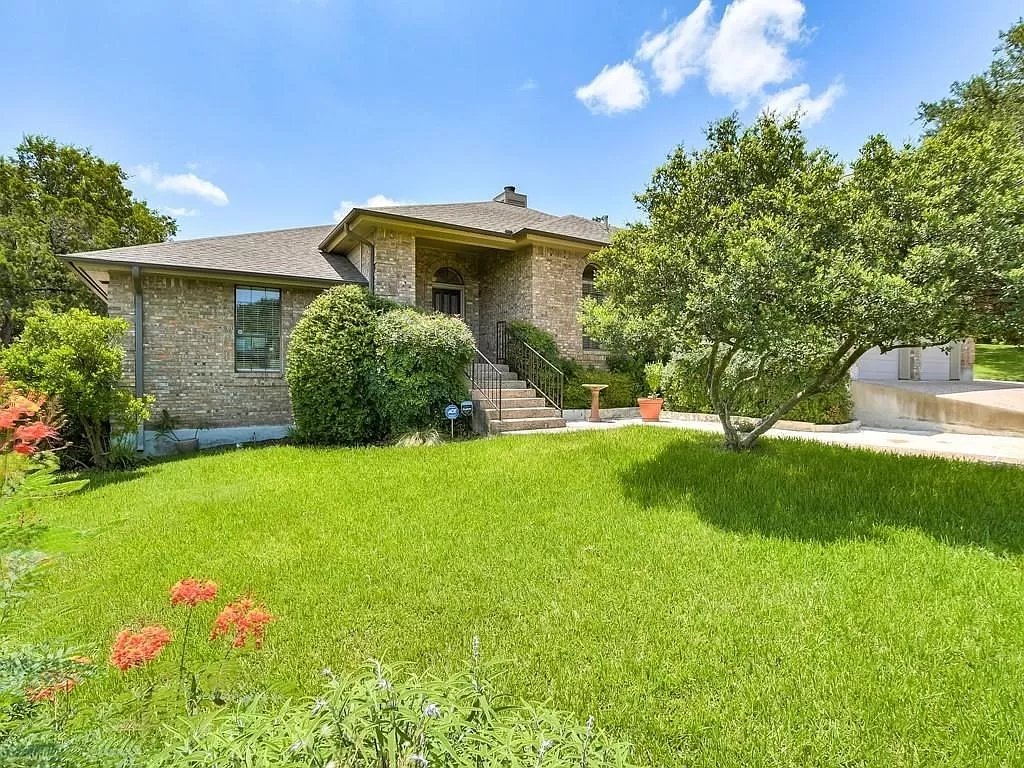
Clearfield ADU
See the project move from 3D planning and floor plans through exterior work, interior work, framing, finishes, and completion.
See the project stages
Wolfcreek ADU
See 3D plans, exterior and interior design development, finish work, and the completed ADU.
See the project stages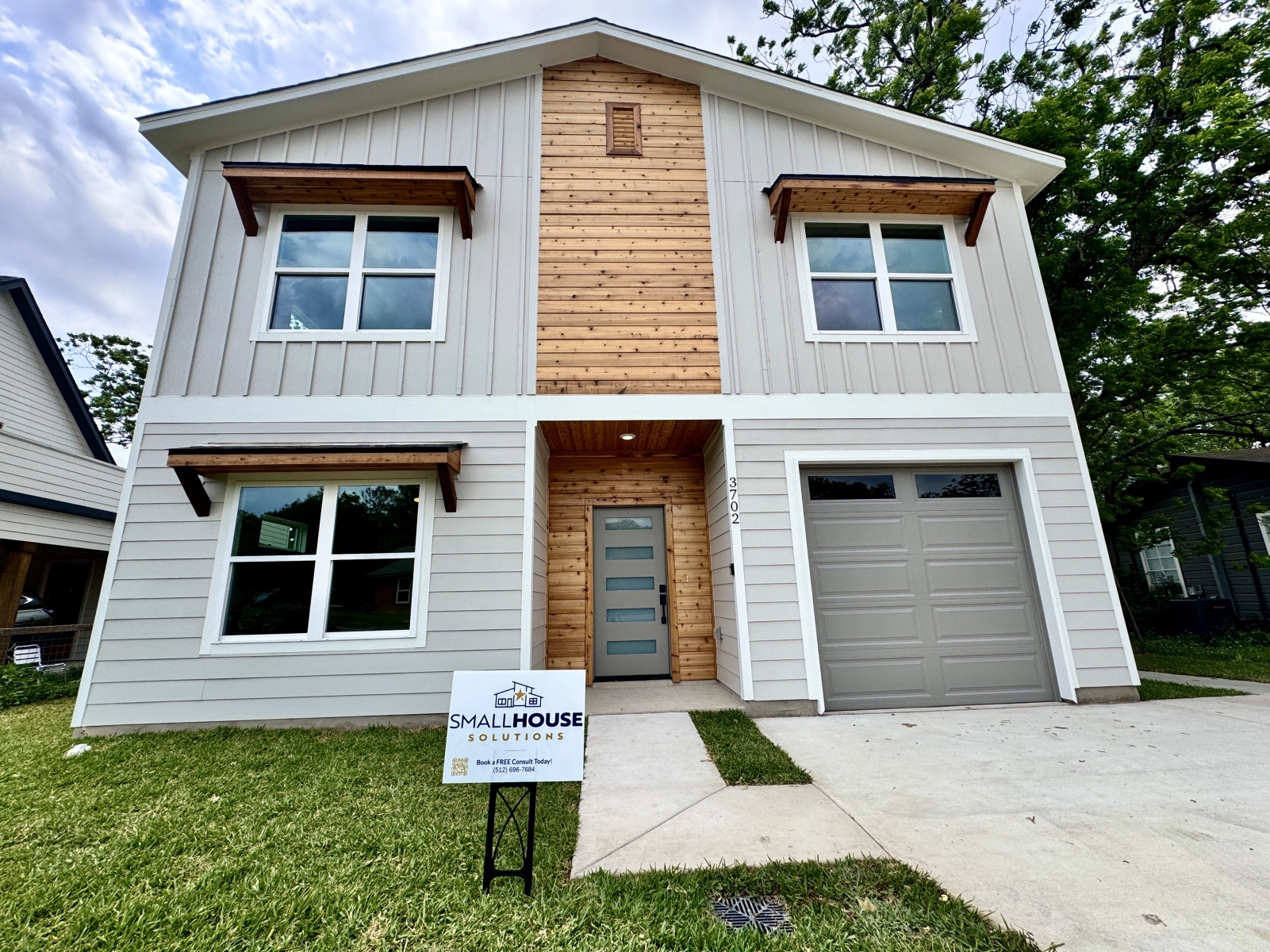
Towerview Dwelling
See structural work, framing, finishing, paintwork, and final details from this completed dwelling project.
See the project stagesKnow who handles each part of your project before you sign.
When a builder says “full service,” ask which people handle each stage, which documents are included, what you will need to approve, and what the written agreement covers.
- Founder-led project fit
- Your first conversation covers the property address, intended use, budget range, timing, and whether the project appears to fit the property and team.
- Dedicated design lead
- Your design lead coordinates conceptual plans, reviews, revisions, layouts, selections, and the decisions needed to move toward construction documents.
- Engineers and licensed trades
- They provide the required engineering and regulated plumbing, electrical, heating, cooling, and other trade work within their licensed responsibilities.
- City reviewers and inspectors
- They make decisions about zoning, plan review, permits, applicable utility approvals, inspections, and final City sign-off.
- You, the homeowner
- You provide accurate property information, approve plans and materials, make decisions on time, and follow the payment and change terms in your agreement.
Before you sign, ask for these items in writing
For construction, the Small House Solutions process uses a hard-cost agreement that lists the price, draw schedule, terms, material specifications, and plans. If final selections are still open, line-item allowances show the working amounts. Your signed agreement should explain how overages, underruns, and change orders will be handled.
- The people leading each stage and how they will communicate with you
- Current registration and insurance documents
- Plans, material details, inclusions, and exclusions
- Allowances, material selections, and change-order rules
- Schedule assumptions, payment draws, and decision deadlines
- Final inspections, walkthrough, remaining work, handoff, and warranty terms
Choose the guide that answers your next ADU question.
Learn more about Austin rules, budget expectations, permit steps, utilities, and property fit so you can prepare for a more useful conversation about your project.
Answers to common Austin ADU questions.
Use these answers to get oriented before your first conversation. The exact requirements will still depend on your address, property documents, project details, current Austin rules, and any required professional review.
What should an Austin ADU builder check first?
Start with your property, not a floor plan. Your builder should review the address, zoning, lot size, existing homes, likely approval path, setbacks, trees, drainage, easements, access, utilities, intended use, and budget. Those details help determine where the ADU may fit and how large it can be.
Can every Austin lot support an ADU?
No. A yard may look large enough, but zoning, usable building area, trees, drainage, easements, utilities, deed restrictions, safety codes, and City review can change where the ADU goes, how large it can be, or whether it can be built.
Who handles ADU permits and review comments?
Small House Solutions can coordinate the drawings, required engineers, permit application, and replies to City comments included in your design-build agreement. Engineers and licensed trades are responsible for their regulated work, while the City makes the permit and inspection decisions.
How long does each Austin ADU stage take?
There is no one-size-fits-all timeline. Property review, design, engineering, City review, construction, inspections, and final handoff can all be affected by your lot, missing documents, plan changes, material choices, utility work, trade availability, and site conditions. Once your project is defined, ask for a stage-by-stage schedule that lists key assumptions and the dates when you need to make decisions.
How much does an Austin ADU cost?
For early planning, Small House Solutions currently uses $240-$500+ per square foot and a $150,000+ construction minimum for projects that include plumbing. These are starting points, not quotes. Your final price depends on size, access, utilities, foundation, design, engineering, permits, finishes, allowances, changes, and contingency.
What should I prepare for an address review?
Bring the property address, intended use, rough size, must-have rooms, target budget, preferred timing, known utility or site concerns, and any survey, plat, deed restrictions, inspiration images, or previous plans you already have. Do not worry if you do not have everything; the review can identify what to gather next.
Tell us what you want the ADU to do and where it needs to fit.
Choose a phone or Zoom consultation and share your address, goals, budget range, and timing. If the project looks like a fit, we can outline the property checks and next planning step.
- Property address
- Intended use
- Rough budget
- Target timing