
Best Texas Home Builders for a Backyard Tiny House for Elderly Loved Ones
The best Texas home builders for a backyard tiny house for elderly loved ones are not chosen by a generic ranking alone. The right builder can connect family care, one-story daily living, privacy, site access, utilities, permits, and senior-friendly design into a project that can actually be built.
A backyard tiny house can help an elderly parent or loved one stay close to family while keeping a separate routine. Before buying plans or accepting a square-foot price, confirm the use case, the property rules, the buildable area, and the details that make the home safer and easier to live in.
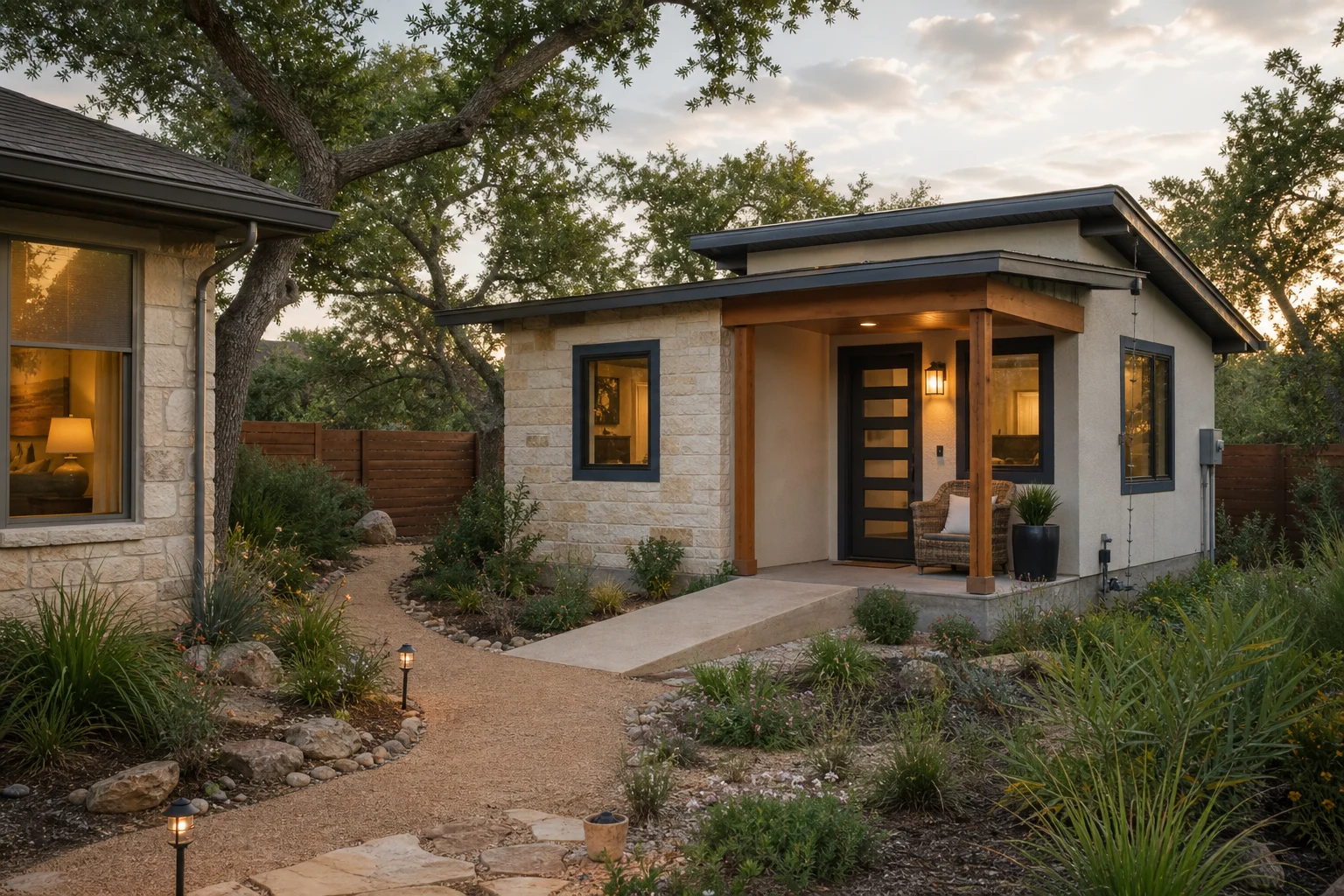
What This Guide Means by a Senior Backyard Tiny House
A backyard tiny house for an elderly loved one is usually a small, complete dwelling placed on the same property as the main home. Depending on the local rules, it may be called an ADU, granny flat, accessory apartment, guest house, or backyard home.
The planning question is not only whether the unit can fit. The real question is whether the home can support one-story living, simple circulation, daily privacy, family check-ins, utility service, emergency access, and a permit path that matches the property.
The workbook target query for this URL is one story tiny house for seniors. This rebuild keeps that senior-living intent while adding your requested builder-selection keyword and Texas proof layer.
Six Checks Before You Choose Plans or a Builder
Use these checks before asking for a fixed construction price or treating a plan set as buildable.
How to Plan a One Story Tiny House for Seniors
Senior-friendly backyard housing works best when the plan starts with daily routines: sleeping, bathing, cooking, medication storage, mobility aids, visitors, emergency access, outdoor sitting, and the relationship to the main house. A one story tiny house for seniors should make the everyday path easy before the drawings become detailed.
Good builders and designers will ask how the home should feel in everyday use before they price the structure. A cheaper plan can become expensive if the bathroom is too tight, the door swing blocks circulation, the threshold creates a trip point, or the utility route was never checked.
- Put the bedroom, bath, kitchen, and sitting area on one level.
- Design the path between the main home and tiny house as part of the project.
- Keep accessibility upgrades in the base plan rather than treating them as late add-ons.
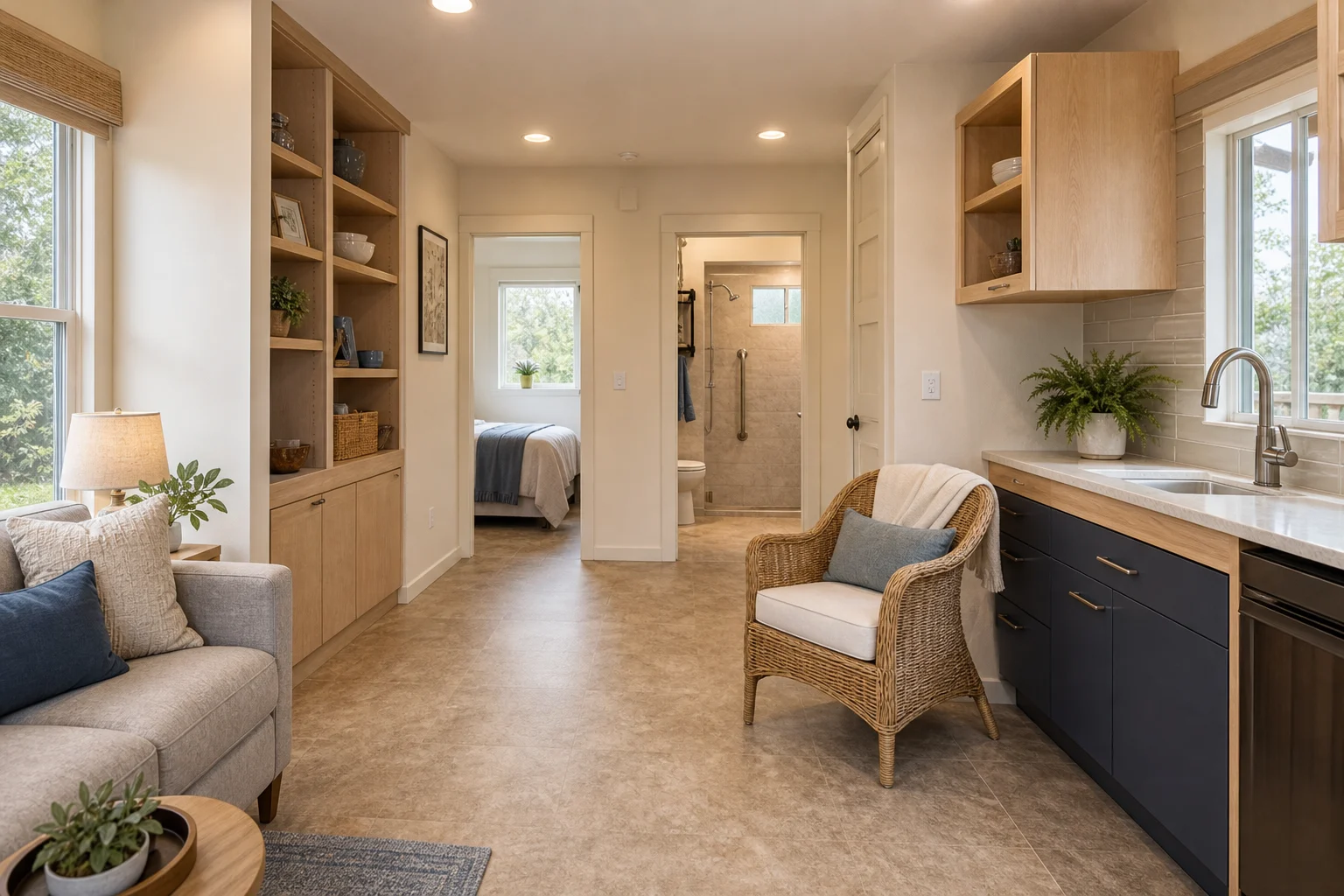
Senior Backyard Tiny House Planning Process
Use this sequence before committing to plans, prefab specs, builder pricing, or construction timing.
Decide whether the home is for independent living, aging in place, short-term recovery, family support, caregiver access, or future flexibility.
Check zoning, lot area, address, utilities, HOA or deed restrictions, trees, drainage, setbacks, and the official permit review route.
Plan the bedroom, bath, kitchen, storage, sitting area, daylight, threshold, door widths, and clear circulation together.
Separate building cost from foundation, utilities, site work, accessibility details, permits, engineering, inspections, selections, and contingency.
Select the builder whose portfolio, license and insurance verification, scope clarity, communication, warranty, and permit experience match the actual project and family need.
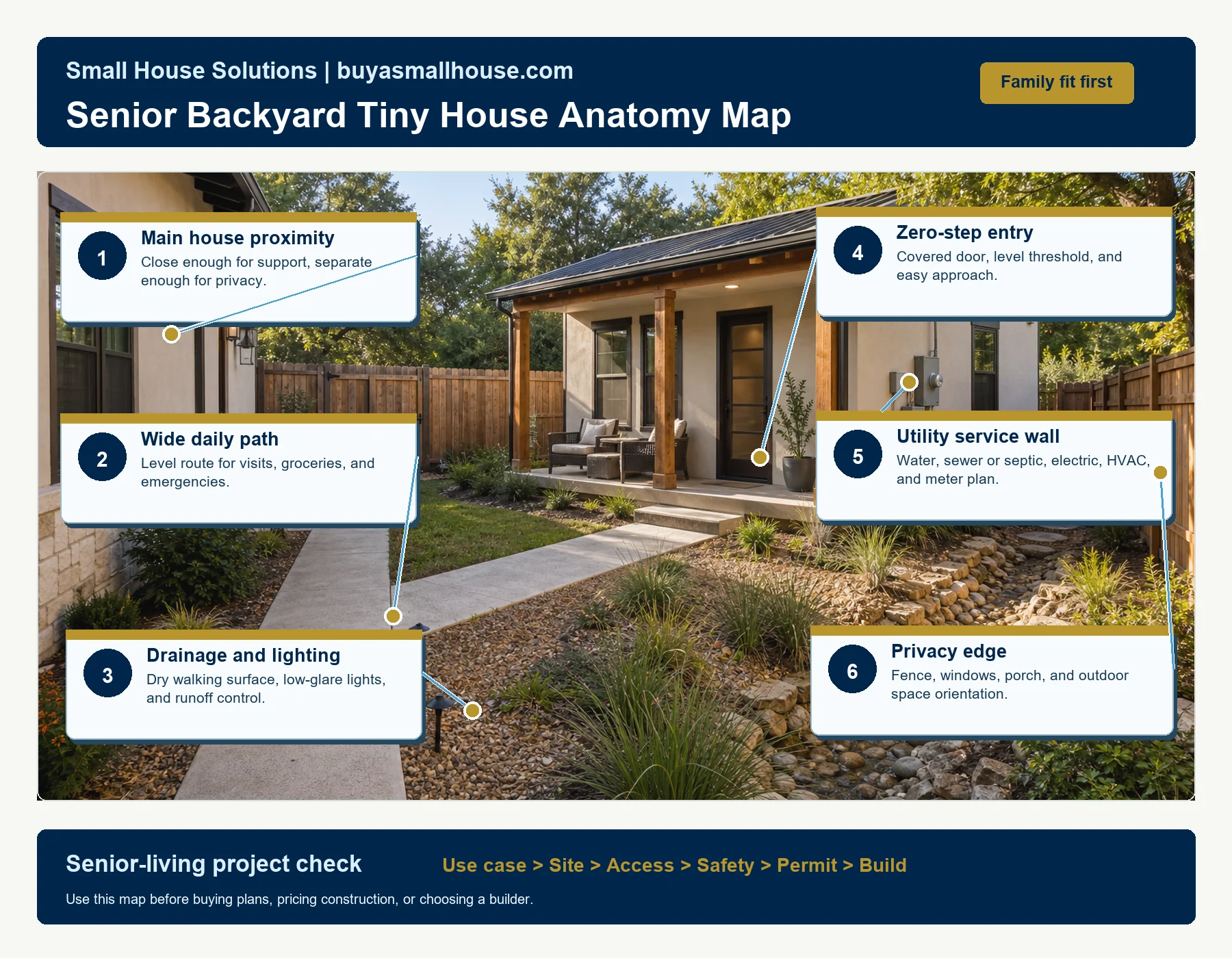
Senior Backyard Tiny House Anatomy Map
The anatomy map below shows what should be checked on the property before a senior backyard tiny house becomes a floor plan or fixed price.
Decision Drivers That Change the Builder Conversation
The same backyard idea can become a simple dwelling, a redesign, or a no-go depending on the person, the property, and the local review path.
| Driver | Why it matters | Decision to make early |
|---|---|---|
| Senior use case | Mobility, bathing, storage, lighting, caregiver access, and emergency response needs shape the layout. | Name the daily living needs before buying a plan. |
| Official permit path | Texas ADU and tiny-house rules are local; the city or county decides the review route. | Confirm the official term and permit path for the address. |
| Site access | Trades, deliveries, inspections, family visits, and emergency access all rely on the route through the property. | Map the side gate, walkway, slope, and staging area early. |
| Utilities | Water, sewer or septic, electric, HVAC, meter strategy, and trench distance can change cost quickly. | Price utility strategy before treating the tiny house price as the full project price. |
| Privacy and relationship | The home should be close enough for support without feeling like leftover yard space or causing window conflicts. | Plan entries, windows, porch, fence, and outdoor space with both homes in mind. |
| Builder proof | A senior-friendly project needs more than pretty photos; it needs clear scope, local process, finish proof, and responsible trade verification. | Ask for a relevant portfolio, references, license and insurance verification, warranty language, exclusions, and official trade verification. |
How Small House Solutions Helps
Small House Solutions helps families turn a broad senior-backyard-home idea into a practical design-build path. The goal is to understand the person, the property, and the permit scope before the project becomes expensive to change.
What To Send Before Asking for Builder Pricing
A better first conversation helps the builder separate the unit cost from site work, accessibility details, utilities, and official review.
Senior Backyard Tiny House FAQ
What should the best Texas home builders know about a senior backyard tiny house?
They should understand one-story living, access, site work, utilities, local permit paths, privacy, lighting, non-slip surfaces, bathroom planning, and how the backyard unit relates to the main home. Ask for a relevant portfolio, license and insurance verification, warranty terms, and completed-work proof before treating any builder as the right fit.
Is a backyard tiny house for an elderly loved one the same as an ADU?
Often it is treated as an accessory dwelling unit or similar secondary dwelling, but the official term and permit path depend on the city, county, zoning, utilities, and private property restrictions.
Why is a one story tiny house for seniors usually better?
A one story tiny house for seniors avoids stairs and loft ladders, keeps daily circulation simpler, and makes it easier to plan wide paths, level thresholds, lighting, and bathroom access.
What design details matter most for elderly loved ones?
Start with zero-step entry, wide doors, clear turning space, good lighting, non-slip floors, reachable storage, bathroom grab-bar planning, no-step shower strategy, and easy connection to the main house.
Should I buy tiny house plans before talking to a builder?
No. Confirm the property, local rules, buildable area, utilities, drainage, access, and senior-livability needs before buying plans or requesting a fixed construction price.
Can a backyard tiny house help an elderly parent stay independent?
It can, when the layout supports daily living and the unit is close enough for family support while still preserving privacy, dignity, and a separate routine.
What can change the cost of a senior backyard tiny house in Texas?
Cost can change because of size, foundation, utility tie-ins, sewer or septic strategy, electrical service, accessibility details, bathroom scope, drainage, trees, permit review, and site access.
How does Small House Solutions help with this kind of project?
Small House Solutions helps homeowners compare the family use case, property conditions, senior-friendly design needs, permit path, utilities, and build scope before the project becomes expensive to change.
What proof should I request from a Texas backyard tiny house builder?
Ask for a portfolio of similar small homes or ADUs, proof of license and insurance where applicable, references, warranty language, permit experience, scope exclusions, and examples that show the builder understands senior-friendly access and one-story living.
Official Sources to Verify
Rules, safety guidance, trade licensing, and local permit paths can change. Use official sources for the exact address and trade scope before final design, financing, or construction decisions.
- Small House Solutions: original elderly loved-one backyard tiny house source page
- CDC: older adult fall prevention and home safety guidance
- ADA.gov: 2010 accessibility standards reference
- Texas State Law Library: Texas building codes guide
- Texas Department of Licensing and Regulation: verify licenses and projects
- AARP: accessory dwelling unit housing overview
- City of Austin Development Services: additional dwelling units
Plan the senior backyard home before you price it.
Bring the address, the family use case, photos, and budget range. Small House Solutions can help compare the project against the actual property, daily living needs, and design-build path.